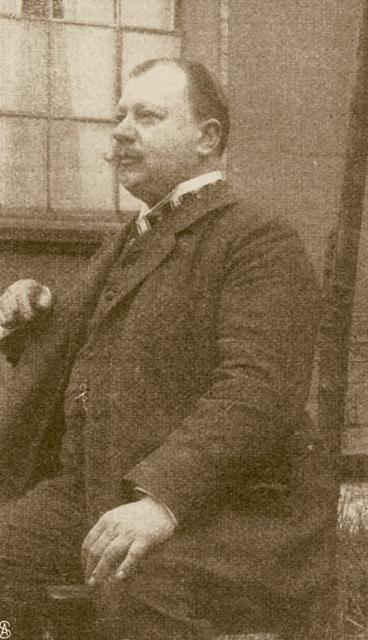
Hermann Klaatsch
 Germany
Education and Early Career
Karl Klaatsch (1863-1916) was a renowned German anthropologist and anatomist. He pursued his medical studies in Heidelberg and Berlin, earning his doctorate in medicine in 1885. Klaatsch worked as an assistant to renowned scientists such as Rudolf Virchow and Heinrich Waldeyer. In 1890, he became a private lecturer and subsequently an associate professor of anatomy in Heidelberg in 1895.
Anthropological Expeditions and Research
Australian and Javanese Expeditions: Klaatsch embarked on expeditions to Australia and the island of Java from 1904 to 1907. These journeys allowed him to study the culture and anatomical characteristics of aboriginal peoples. He documented his findings, contributing to the understanding of human diversity.
Scientific Contributions: Klaatsch's scientific work focused on comparative skeletal anatomy and craniometry. He investigated issues related to the evolution of humans, including bone formation and phylogenesis. Notably, he described several fossil human remains, providing valuable insights into human origins.
Academic and Scientific Legacy
Professorial Appointments: In 1912, Klaatsch joined the faculty of the University of Breslau.
Theory of Polygenism: Klaatsch propounded the theory of polygenism, suggesting that different human races had separate origins from distinct hominoid ancestors. While his intention was not to support racist ideologies, this theory was unfortunately used as a justification for such beliefs.
Posthumous Publication: Klaatsch's most significant work, "Der Werdegang der Menschheit und die Entstehung der Kultur" (The Development of Mankind and the Origin of Culture), was published posthumously in 1920. It remains a significant contribution to the field of anthropology, despite its contentious implications.


