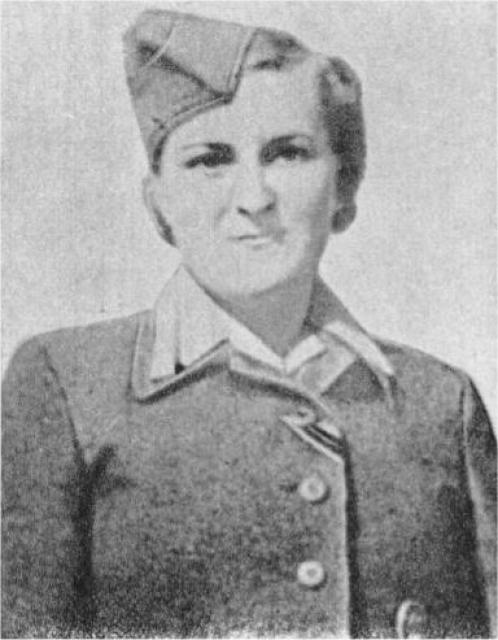
Hermine Braunsteiner
 Germany
- Biography of Hermina Braunsteiner
- Work in Concentration Camps
- Post-War Life and Extradition
- Trials and Conviction
- Later Life and Death
Biography of Hermina Braunsteiner
Early LifeHermina Braunsteiner was born in Vienna, Austria, into a working-class Catholic family. Her father, Friedrich Braunsteiner, worked as a driver at a brewery, while her mother, Maria Braunsteiner, was a laundress. Hermina, a tall, blue-eyed blonde, only completed 8 years of schooling. She aspired to become a nurse but lacked the financial means, so she worked as a domestic servant instead.
Work in Concentration Camps
In 1939, Braunsteiner began working as a female overseer ("Aufseherin") in the Ravensbrück concentration camp under the guidance of Maria Mandel. After a few years, she requested a transfer due to a professional conflict with Mandel. In October 1942, she started working at the Majdanek death camp, where she committed her most notorious crimes. Braunsteiner participated in the selection process, separating women and children before they were sent to the gas chambers. She also physically assaulted and killed several women. Her sadistic behavior earned her the nickname "The Stomping Mare" or "The Mare of Majdanek."
Post-War Life and Extradition
After the war, Braunsteiner worked menial jobs in hotels and restaurants. In 1958, she married American citizen Russell Ryan, and they lived in Canada for a while before settling in the United States. She became a naturalized American citizen in 1963. However, in 1971, her U.S. citizenship was revoked for concealing her wartime activities when applying for citizenship.
Meanwhile, the German government began investigating Braunsteiner's wartime actions, and in 1973, they requested her extradition. Initially, the U.S. court rejected the request, but after further investigation and testimonies from survivors, Braunsteiner became the first Nazi war criminal extradited from the U.S. to Germany. She was imprisoned in Düsseldorf from 1973 to 1996.
Trials and Conviction
Braunsteiner faced trial alongside 15 other guards from Majdanek. The trial, known as the "Third Majdanek Trial," lasted from 1975 to 1981 and was the longest and costliest trial in German history. Testimonies described her brutal treatment of prisoners, including throwing children into gas chambers and beating inmates with steel-lined boots. Although some charges were dropped due to insufficient evidence, Braunsteiner was found guilty of murdering 80 people, participating in the murder of 102 children, and aiding in the deaths of 1,000 people. She received a life sentence, the most severe punishment among the defendants.
Later Life and Death
Health complications, including diabetes and leg amputation, led to Braunsteiner's release in 1996. She died on April 19, 1999, in Bochum, Germany. Following her case, the U.S. government established the Office of Special Investigations within the Criminal Division of the Department of Justice to prevent the granting of U.S. citizenship to war criminals.