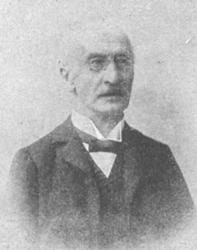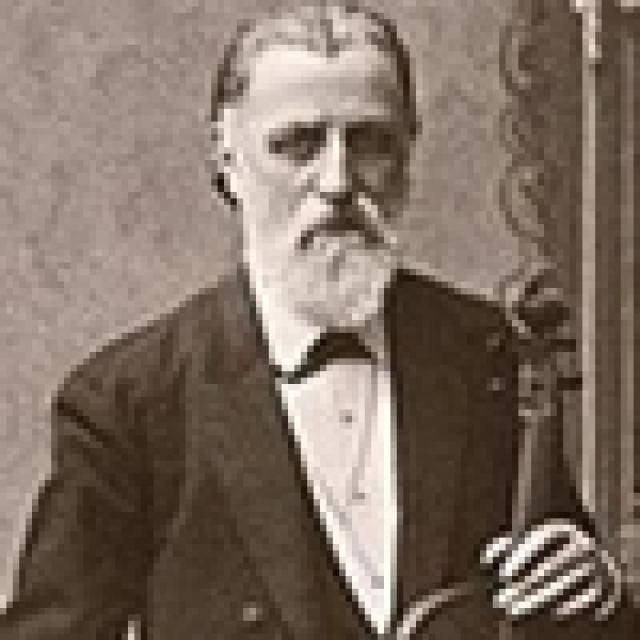
Hieronymus Weickmann
 Germany
- Hermann Ritter
- Early Career and Joining the Mariinsky Orchestra
- Contributions to Russian Music
- Recognition and Legacy
- Educator and Mentor
Hermann Ritter
Hermann Ritter (also known as Hermann Veikman or Вейкман), a Russian violist of German descent, left an unforgettable mark on the Russian musical landscape.
Early Career and Joining the Mariinsky Orchestra
In 1853, Ritter embarked on his professional journey in Russia. He played a pivotal role in the Mariinsky Theater's orchestra from 1855 to 1890, showcasing his exceptional talent.
Contributions to Russian Music
In 1859, Ritter joined the prestigious string quartet of the Russian Musical Society's St. Petersburg branch. For three decades, he collaborated with renowned musicians such as Leopold Auer, Ivan Pichel, Karl Davidov, and Alexander Verjbilovich. Ritter's musicality extended beyond chamber music, as he performed as a soloist, leaving an enduring impression when he played the solo part in Hector Berlioz's "Harold in Italy" with the composer conducting.
Recognition and Legacy
Ritter's artistry attracted the attention of renowned musicians. Anton Rubinstein penned a sonata for viola and piano, which Ritter performed with the composer himself. Henryk Wieniawski dedicated his viola piece "Rêverie" to Ritter.
Educator and Mentor
In 1863, Ritter became an esteemed professor at the St. Petersburg Conservatory. His notable students included Vasily Bessel, who later became a prominent music publisher. Ritter left a profound legacy in the Russian musical world, influencing a generation of musicians through his pedagogy and mentorship.