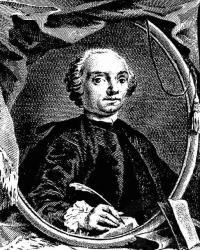
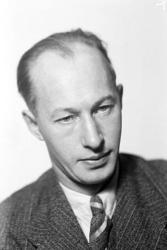
Holger Drachmann
 Denmark
- Holger Drachmann: A Renowned Danish Writer
- Embrace of Revolutionary Ideals
- Democratic Advocate
- Rebellion Against Realism
- Departure from Modern Society
- Outsiders and Criticism
- Late Years and Legacy
Holger Drachmann: A Renowned Danish Writer
Holger Drachmann was a prominent Danish writer who initially pursued painting. His impressionistic seascapes reflected his enduring passion for the sea. In 1870, he shared his insights on Danish painting through articles from London.
Embrace of Revolutionary Ideals
Amidst the bustling English working-class circles and French communards, Drachmann immersed himself in revolutionary concepts. This inspiration manifested in his early poetry collections, such as "English Socialists," "King Mob," and "On the Plain of Satari."
Democratic Advocate
Drachmann's democratic inclinations were evident in his stories about Danish sailors, including "Paa S?mands Tro og Love." His writings of the 1870s, including novels, stories, and even lyric poetry, aligned closely with Georg Brandes's political and literary radicalism.
Rebellion Against Realism
Drachmann grew disillusioned with the dominance of realism and protested against it through two plays infused with romantic interpretations of folktales. In 1883's "Skyggebilder" (Silhouettes), he openly challenged the modernist movement led by Brandes, seeking to establish a patriotic nationalism that suffused his subsequent works.
Departure from Modern Society
The 1890s marked a further departure for Drachmann. He distanced himself from societal norms, romanticizing the alluring temptress figure in works such as "The Turkish Rococo" and "Book of Songs." His writing embraced sensual pleasures and hysterical ecstasies, glorifying intoxication and war as life's benefactors.
Outsiders and Criticism
Drachmann's protagonists increasingly became marginalized figures from medieval vagabonds to London prostitutes. He condemned modern society, arguing that 19th-century culture had misled its people, leading to superficiality and bitter cynicism. His journey meandered from socialism to patriarchal nationalism and ultimately to moral anarchism.
Late Years and Legacy
In his final years, Drachmann penned lyrical melodramas and poems tinged with resignation. As a poet, he ranks among Denmark's greatest lyricists. His prose and dramatic works, while less distinguished, are valuable for their lyrical elements and their portrayal of a nostalgically envisioned medieval world.