Hose Leandro Andrade
 Uruguay
- Biography of José Leandro Andrade
- Playing Career
- The "Black Wonder"
- Breaking Barriers
- Post-Football Career
Biography of José Leandro Andrade
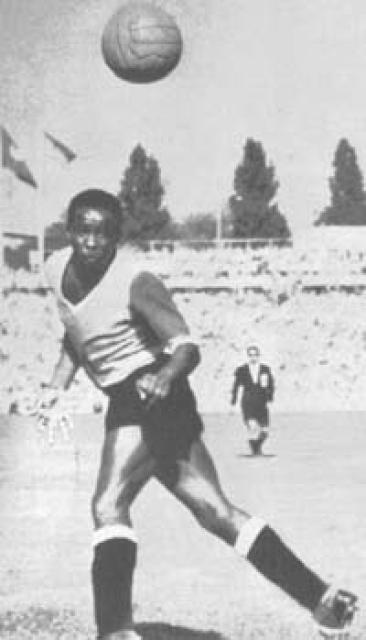
José Leandro Andrade was a renowned Uruguayan football player, known for his exceptional skills and artistic style of play. Born on November 22, 1898, in Montevideo, Uruguay, Andrade gained fame and attention for his outstanding performances in the football matches of the Paris Olympics, earning him the nickname "The Musician of Football" and "The Black Wonder". He passed away on October 1, 1957, in Montevideo, Uruguay.
Playing Career
Andrade played for several Uruguayan clubs during his career, including Peñarol, Miramar Misiones, Reformers, Wanderers, Bella Vista, Nacional, and Atlanta, from 1920 to 1933. He won numerous titles, including the Olympic champion in 1924 and 1928, the World Cup champion in 1930 (where he was named the tournament's best player), and the South American champion in 1923, 1924, and 1926.
Throughout his career, Andrade played approximately 800 matches and scored around 300 goals. He also represented the Uruguayan national team from 1922 to 1933, playing 43 matches. In the 1920s, European fans were captivated by the South American style of football, particularly that of Uruguay and Argentina, and Andrade played a significant role in introducing this artistic and unpredictable style of play to the European audience.
The "Black Wonder"
Andrade was often referred to as the "Black Wonder" due to his exceptional skills and contributions to the game. Despite not being the most important player in the legendary Uruguayan team, he left a lasting impression on the audience and was widely recognized for his artistic style of play. He possessed incredible rhythm and coordination, which he demonstrated not only on the football field but also in his dancing abilities.
Breaking Barriers
As a black football player in a time when racial discrimination was prevalent, Andrade faced significant challenges. However, he became the first black football player to gain worldwide recognition, breaking barriers and defying racial stereotypes. His performances in the Paris Olympics left a lasting impact, and he was praised by newspapers for playing football as if it were a musical instrument.
Post-Football Career
After retiring from football, Andrade pursued a career in music and dance. He performed in nightclubs and variety shows, showcasing his talents in tango, samba, and rumba. He also led his dance group called "Poor Cuban Blacks." Although his personal life remains relatively unknown, it is known that Andrade was married twice.
José Leandro Andrade's legacy as one of the greatest football players of his time lives on. His unique style of play, exceptional skills, and ability to captivate the audience with his performances continue to inspire football players and fans alike. Despite facing adversity, Andrade's contributions to the sport and his impact on breaking racial barriers have solidified his place in football history.