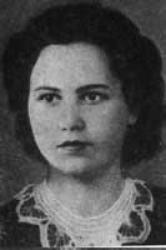
Hubertas Borisa
- Early Life and Education
- Political Activism
- Military Service
- Mission to Occupied Kaunas
- Tragic Death
- Legacy
Early Life and Education
Borisas Gubertas was born on August 27, 1920, in Жадавайняй, Lithuania, to a peasant family. After completing primary school, he studied and worked as a mechanic at a machine shop. He later enrolled at the Polytechnic School in Kaunas, where he became the head of the Komsomol (Young Communist League) cell.
Political Activism
In 1940-1941, Gubertas served as the secretary of the Utena District Committee of the Komsomol. With the outbreak of World War II, he was evacuated to Penza.
Military Service
Gubertas joined the Soviet Army in 1941, initially as a member of the Separate Motorized Rifle Brigade of the NKVD (Soviet secret police). In October 1943, he transferred to the Separate Detachment of Special Purpose of the NKGB (later KGB). He participated in the defense of Moscow.
Mission to Occupied Kaunas
In May 1942, Gubertas, as part of the "Stas" reconnaissance group, infiltrated occupied Kaunas, Lithuania. As the group's leader and a member of the Kaunas underground Communist Party committee, he established contact with local Komsomol organizations, carried out reconnaissance missions, and participated in publishing the underground newspaper "Komsomolets."
Tragic Death
In early 1944, Gubertas was tasked with gathering intelligence on the composition and plans of nationalist bands. On March 31, 1944, while carrying out this mission, he was ambushed, wounded, and apprehended by the Nazis. He was executed on April 27, 1944, in the Gestapo prison. His burial site remains unknown.
Legacy
Borisas Gubertas was posthumously awarded the title of Hero of the Soviet Union in 1958 for his bravery and heroism during World War II. He is remembered as a fearless and dedicated patriot who fought against the Nazi occupation and left a lasting legacy as a symbol of resistance and sacrifice.