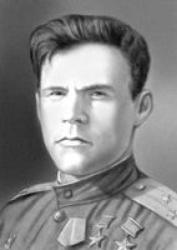
Gennadij Velichko
 Belarus
Biography of Gennady Velichko
Gennady Iosifovich Velichko was a Soviet sniper and Hero of the Soviet Union. He was born on February 15, 1922, in the village of Lutno, now in the Shklovsky District of the Mogilev Region, in a peasant family. After completing 7 grades of school, he worked on a collective farm. In 1940, he joined the Red Army and graduated from an aviation technical school for mechanics in 1941. When the Great Patriotic War began, he served in the active army and participated in battles in Stalingrad, on the Don River, in the liberation of Ukraine, Poland, and Czechoslovakia.
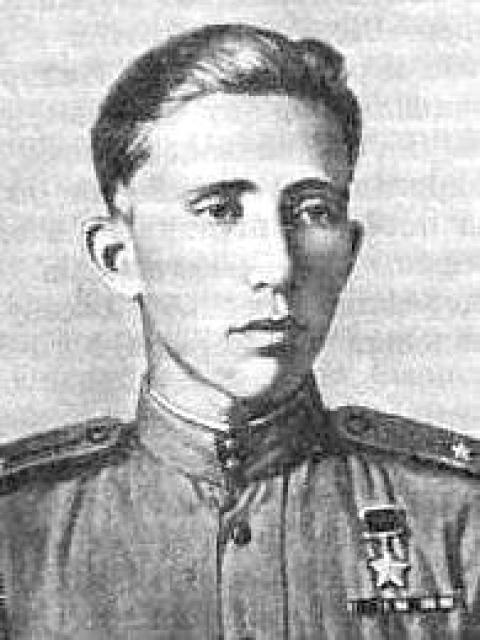
By June 1943, Gennady I. Velichko, as a senior sergeant of the 1008th Rifle Regiment (266th Rifle Division, 3rd Guards Army, Southwest Front), had destroyed over 300 enemy soldiers and officers and trained 14 snipers. On October 26, 1943, he was awarded the title of Hero of the Soviet Union for his courage and military valor demonstrated in battles against the enemy.
In 1946, Lieutenant G.I. Velichko retired from the military and worked in the city of Kamensk-Shakhtinsky in the Rostov Region. In 1963, he graduated from the electromechanical technical school. From 1967, he lived and worked in the city of Enakievo in the Donetsk Region. He was decorated with the Orders of Lenin, the Red Banner, and the Patriotic War 1st Class, as well as various medals.
The Role of Gennady Velichko as a Sniper
In the spring of 1943, the 3rd Guards Army received a directive from the commander of the Southwest Front to transition to temporary defense along the Seversky Donets River from Lisichansk to Voroshilovgrad. The army command's opinions on fortifying the positions, considering the effective use of the water barrier, were reflected in the relevant documents and combat orders to the troops. Instructions were given for the preparation of a plan for combat and political training during the defense, while not neglecting the prospect of offensive operations. Close attention was paid to incorporating the experience of battles near Moscow and Stalingrad.
Simultaneously with strengthening the defense, units were periodically withdrawn to the rear for combat and political training. Emphasis was placed on the training of platoons, companies, and batteries in tactics and marksmanship. Practice was accumulated in cooperation within units and with other branches of the armed forces, such as infantry with artillery and tanks, and vice versa. Commanders and staffs also conducted exercises on maps and in terrain similar to that behind the enemy's defenses. Alongside tactical training, significant attention was paid to improving marksmanship. Snipers were trained in the regiments and divisions, many of whom had dozens or even hundreds of enemy soldiers and officers to their credit. For example, in May 1943, the 266th Rifle Division had the following sniper achievements: Junior Lieutenant G. Velichko - 360, Junior Lieutenant F. Istichkin - 177, Sergeant E. Zhuchenko - 120, Senior Lieutenant A. Akimov - 166, Senior Lieutenant P. Savitsky - 111, Red Army soldier I. Chebotarev - 92, Sergeant V. Cheremisov - 83, Senior Sergeant I. Kotlyarov - 71, Red Army soldiers Ryzhok - 68, Klinkov - 63, Ya. Poznov - 58, A. Kalendarov - 55, B. Akmessibetov - 48, A. Kiseleva (a 16-year-old girl) - 46. They were all members of the Lenin Komsomol. They were led by Junior Lieutenant G.I. Velichko, a sniper instructor.
Many snipers were honored with government awards, and Junior Lieutenant Komsomol member Gennady Iosifovich Velichko was awarded the title of Hero of the Soviet Union in October 1943. After the war, G.I. Velichko, who had gained fame during the battles for the liberation of Donbass, engaged in peaceful work. He was actively involved in public work and willingly met with young soldiers of the Soviet Army.