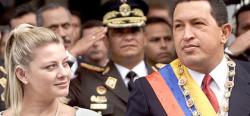
Hugo Chavez
 Venezuela
Biography of Hugo Chavez
Hugo Chavez was a Venezuelan statesman and military leader who served as the President of Venezuela from 1999 to 2013. Born in 1954 to a peasant family in the Venezuelan province, Chavez's background was unique for a Latin American president, as most political leaders in the region came from different circles.

Chavez began his military career in his early youth, which for many impoverished Venezuelans, was a way to solve their economic problems. Throughout his life, literature played a significant role, with Chavez being an avid reader of history, philosophy, the Bible, and poetry. As a representative of his social group in Venezuela, Chavez was known for his outspoken and direct nature, lacking the political maneuvering and diplomacy skills of professional politicians. This characteristic often created problems for him and his government, as his long speeches filled with biblical allegories, poetry, and passion could be perceived as vulgar by members of the middle and upper classes.

By the time of his armed uprising in 1992, Venezuelan society was deeply disillusioned with traditional political parties, whose corruption had surpassed all imaginable limits. The living standards of the country were deteriorating year by year, and the nation was in need of a new leader. Many, especially the poorest and least educated citizens, were waiting for a messiah to emerge. When they saw the young officer in a red beret on February 4, 1992, speaking about Christ and Bolivar, the similarities between his simple face and words and those of millions of poor Venezuelans led the country to make its choice.

Chavez spent two years in prison after the failed coup. However, upon his release, he was welcomed by the people as a hero, and thousands of his supporters in red berets took to the streets. In subsequent years, Chavez faced numerous challenges, with both domestic and international media, powerful economic groups, and the United States Department of State accusing him of being a dictator or a madman. However, throughout his presidency, there were no political prisoners, no opposition news outlets were closed, and no property was nationalized or expropriated.

Venezuela, under Chavez's leadership, pursued an independent foreign policy, refusing to participate in economic embargoes against Cuba and the civil war in neighboring Colombia. This made Venezuela one of the few countries in the Western Hemisphere attempting to conduct its own independent policies. However, these actions led to Chavez being labeled a dictator, and his government being considered unlawful.

Chavez's presidency was marked by his commitment to change Venezuela, its laws, and its mentality. He aimed to return the country to its people, particularly those who had never truly owned it. Chavez's tenure was characterized by social programs aimed at reducing poverty and inequality, including reforms in education, healthcare, and housing. Despite these efforts, his presidency was not without controversy, and the country remained deeply divided between those who supported him and those who opposed him.
In April 2002, an attempted coup against Chavez's government was thwarted by unarmed masses who took to the streets. The coup plotters had prepared videos of military officers demanding the president's resignation, which were broadcast on private television channels. It was later revealed that these videos had been prepared by private channels several days before the coup. Additionally, two high-ranking officers from the US Armed Forces were present in the coup plotters' headquarters from the early hours of the coup. During the coup attempt, the US violated Venezuelan airspace multiple times with ships, airplanes, and helicopters. These details, along with the brave actions of the Venezuelan people, contributed to the failure of the coup.
Today, Venezuela faces a complex reality, with the government of Chavez's successor struggling to control the situation in a deeply divided country. Despite the support from the majority of the population, challenges remain, and it is uncertain how the future will unfold for Venezuela.