Nicolas Maduro
 Venezuela
Biography of Nicolas Maduro
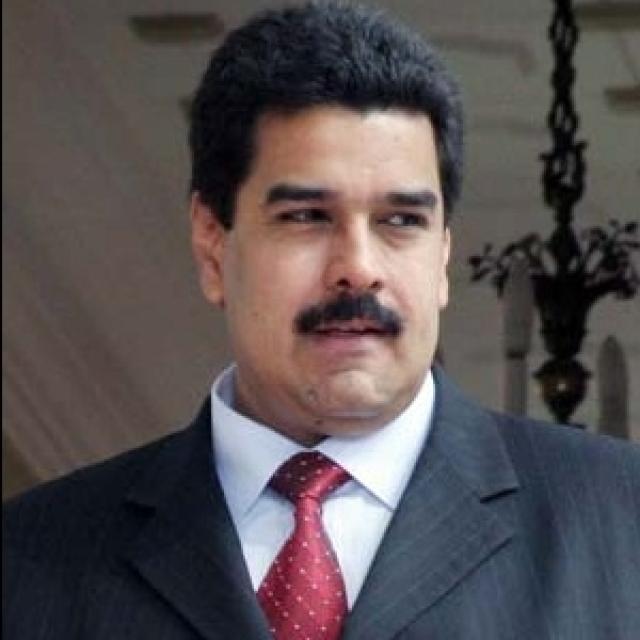
Nicolas Maduro, the 49th President of Venezuela, has been in power since April 19, 2013. He is a Venezuelan political and trade union leader who was appointed as the temporary president of Venezuela on March 8, 2013, following the death of Hugo Chávez. Prior to this, he served as the Vice President of Venezuela from October 2012. Maduro, a former bus driver, rose to prominence as a trade union leader and eventually secured a position in the Venezuelan government under the administration of Chávez. In August 2006, he became the Minister of Foreign Affairs. Maduro is described as the most capable manager and politician from Chávez's inner circle.

Early Life and Education
Nicolas Maduro was born on November 23, 1962, in Caracas, Venezuela. He comes from a family with a union leader father who sympathized with leftist ideologies. Maduro completed his education at the state school 'Liceo José Ávalos' in El Valle, a working-class neighborhood on the western outskirts of Caracas. In his youth, Maduro was involved in the school student union, and his active participation in the union foreshadowed his future political career. Although Maduro was raised in Catholic traditions, he now considers himself a follower of the teachings of neo-Hindu guru Sathya Sai Baba. He is also of Sephardic Jewish descent.
Political Career
Maduro's political career began when he worked as a bus driver and unofficial representative of the trade union that defended the rights of Caracas metro workers in the 1980s. In the 1990s, Maduro actively participated in the formation of the socialist party 'Movement of the Fifth Republic' (Movimiento V República), which supported Chávez's victory in the 1998 presidential elections. In the same year, Maduro was elected to the lower house of the Venezuelan parliament and was reelected to the Assembly in 1999, 2000, and 2005. He served as the speaker of the Assembly from 2005 until August 9, 2006, when he became the Minister of Foreign Affairs. Interestingly, the Minister of Foreign Affairs of Venezuela does not speak any foreign languages. During his tenure, Maduro supported former Libyan leader Muammar Gaddafi and caused a diplomatic crisis with Colombia in 2010.
Presidential Career
On December 8, 2012, in a national address, President Hugo Chávez announced that his cancer had returned, and he would have to undergo urgent surgery and further treatment in Cuba. Chávez stated that if his condition worsened and Venezuelans needed a new president, he urged them to vote for Maduro as his successor. Consequently, after Chávez's death on March 5, 2013, Maduro became the temporary president. According to the Venezuelan constitution, new presidential elections are required to be held within 30 days of Chávez's death, and Maduro will participate in them. Maduro leans towards communist ideology and is considered not the most pragmatic politician. When announcing Chávez's death, he claimed that the Venezuelan president had been poisoned by "historical enemies" and also referred to opposition figures as fascists. His allegations that the CIA had "infected" Chávez with cancer were deemed "absurd" by the United States. Maduro's pre-election campaign focuses on the personality of the late leader rather than on himself, a move criticized by his opponents. Additionally, Maduro has been accused of homophobia for calling opposition activists "faggots" but later publicly apologized after facing widespread condemnation.