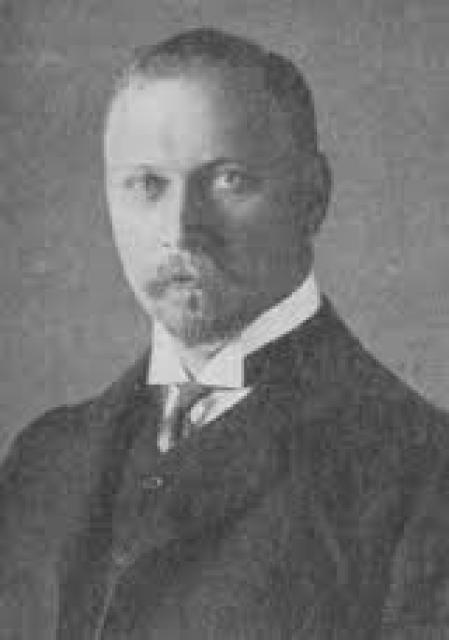
Iakov Demchenko
 Russia
Early Life and Career
Jacob Grigorievich Demchenko(October 8, 1842 - February 1, 1912) was a public figure and author known for his writings criticizing Judaism and Jewish aspirations for global domination. Born into a noble family in the village of Denga, Poltava Governorate, he graduated from the 1st Kiev Gymnasium and the law faculty of St. Vladimir's University in Kiev in 1868.
After his graduation, Demchenko served as a magistrate in the Chigirinsky district of Kiev Governorate for 28 years. He also held the position of judicial investigator. In 1897, he retired from the judiciary and settled in his estate in the Aleksandriya district of Kherson Governorate, where he pursued farming and public-literary activities.
Literary and Political Involvement
Elected as honorary magistrate and zemstvo deputy of the Aleksandriya district, Demchenko remained actively involved in local politics. He devoted his spare time to writing, publishing articles on economic and political issues in the newspaper "Kievlianin" and as separate editions.
Demchenko's writings focused on exposing the alleged Jewish plot to dominate Russia. He vehemently opposed the removal of Jewish restrictions on settlement. However, his interests extended beyond anti-Semitism. He also wrote about other pressing issues, including Ukrainian nationalism.
Views on Ukrainian Nationalism
Demchenko held a unique perspective on Ukrainian nationalism. While sympathetic to its goals of preserving the distinct language and culture of the Little Russian people, he rejected accusations that the movement sought separatism. He urged both Great Russians and Little Russians to unite against their common enemies: Jews and Polish interests.
Other Writings
In his writings, Demchenko emphasized the importance of unity within the Russian Empire. He argued that Ukrainian nationalists were wrongfully suspected of separatism and that they, like the Great Russians, shared a common destiny in fighting external threats. He highlighted the contrast between the low incidence of revolutionary activity in Kiev and the involvement of Jewish, Polish, and mixed elements elsewhere.
Demchenko called for cooperation between the two branches of the Russian people, stressing the benefits that each could gain from understanding and respecting the other's cultural heritage. He believed that by working together, they could strengthen the nation and resist attempts at division.


