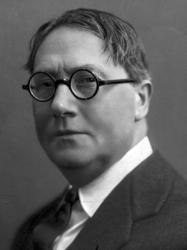
John Bull
 Great Britain
- Biography of John Bull
- Early Life and Education
- Secret Missions and Service to King James
- Later Years and Legacy
Biography of John Bull
John Bull was an English composer, musician, and master organ builder. He was a renowned keyboard player of the "virginalist" school, and most of his works were composed for this instrument.
Early Life and Education
The exact birthplace of John Bull is unknown. The 17th-century antiquarian Anthony Wood first suggested that the Bull family originated from Somerset. Musicologist Thurston Dart held the same opinion in 1952, but later changed his mind in 1959, stating that John was likely the son of a London jeweler. More recent research by Susi Jeans suggests that Bull was born in Radnorshire, Herefordshire.
In 1573, John joined the choir at Hereford Cathedral and began his education at the Chapel Royal in London under the guidance of John Blitheman and William Hunnis. In addition to singing, Bull also learned to play the organ. He obtained his first appointment as an organist at Hereford Cathedral in 1582, and later became responsible for the education of children. In 1586, Bull received a degree from Oxford and was appointed organist in 1591. A year later, he obtained a doctorate from Oxford. In 1596, Bull became the first professor of music at Gresham College, recommended by Queen Elizabeth herself, who admired his talent.
Secret Missions and Service to King James
There is evidence to suggest that Queen Elizabeth sent Bull on secret spy missions. For example, during his mysterious 18-month trip from 1601-1602, which was supposedly undertaken to improve the composer's health, it is only known that Bull visited Brussels. After Elizabeth's death, John entered the service of King James, solidifying his reputation as an experienced composer, keyboard player, and improviser.
Ten years after his appointment at Gresham College, on December 20, 1607, Bull was forced to leave his position because his future wife, Elizabeth Walter, gave birth to an illegitimate child. When Bull lost his job and his regular income, he petitioned for marriage, but it did not help him regain his position at the college. He married Walter in 1607, and she gave birth to their daughter.
In October 1613, immediately after the publication of seven of his works in the first English printed music collection "Parthenia," the composer secretly and hastily fled England. He feared the anger of George Abbot, Archbishop of Canterbury, and King James I. A year before his escape, the Archbishop of Canterbury had called John a man who excelled more in music than in honesty, known for his skills on the organ and spinet rather than his integrity and married life. This time, Bull was accused of adultery. William Trumbull, the English ambassador to Belgium, the Netherlands, and Luxembourg, stood up for him, but after the first unsuccessful attempt, Trumbull began to fear that he might lose his position as well, so he quickly withdrew his support.
Bull remained in Flanders, where he tried to stay away from trouble. In 1615, he was appointed assistant organist at the Cathedral of Our Lady in Antwerp, Belgium, and two years later became the principal organist. While in Flanders, he wrote several letters, including one to the mayor of Antwerp, claiming that he left England out of fear of religious persecution.
Later Years and Legacy
In the 1620s, John continued his career as an organist, master organ builder, and musical expert. He died in Antwerp on March 15, 1628, and was buried in the cemetery near the cathedral.
Bull was one of the most renowned composers for keyboard instruments in the early 17th century. He was second only to Sweelinck from the Netherlands, Frescobaldi from Italy, and the famous William Byrd. He left behind a vast body of works for keyboard instruments, some of which are included in the "Fitzwilliam Virginal Book."
In addition to keyboard compositions, Bull also wrote rhymed hymns, canons, and other works. Unfortunately, a large portion of his works were lost when he fled England, and some were destroyed or stolen by other composers. Bull is sometimes attributed as the author of the British national anthem, "God Save the King."