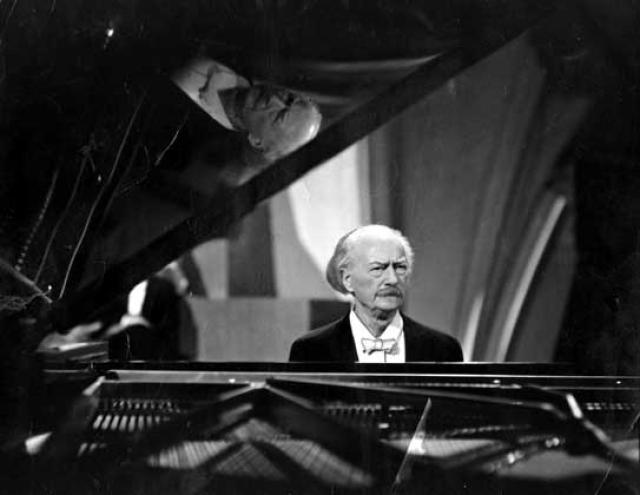
Ignaz Paderewski
 Poland
- Ignacy Jan Paderewski: A Virtuosic Musical and Political Legacy
- Recognition in Berlin and Vienna
- Pianistic Brilliance and Composition
- Patriotic Advocate and Statesman
- Legacy and Influence
Ignacy Jan Paderewski: A Virtuosic Musical and Political Legacy
Early Life and Musical BeginningsIgnacy Jan Paderewski was born on November 18, 1860, in the village of Kurylivka, Podolia (present-day Ukraine). Despite showing early musical talent, beginning piano lessons at age three and composing at seven, Paderewski's musical development initially progressed gradually. He studied with private tutors and later at the Warsaw Conservatory of Music (where he eventually taught piano).
Recognition in Berlin and Vienna
Paderewski's chance encounter with renowned pianist Anton Rubinstein and other prominent musicians in Berlin brought him recognition. In 1884, he commenced studies with the celebrated педагоgee Theodor Leschetizky. Paderewski's subsequent musical debuts in Vienna (1887), Paris (1889), London (1890), and New York (1891) catapulted him to international stardom.
Pianistic Brilliance and Composition
Compared to the likes of Franz Liszt, Paderewski was hailed as one of the world's foremost pianists. While his numerous compositions spanned multiple genres, they remained overshadowed by his performing reputation. Notable exceptions include his opera "Manru" (premiering in Dresden in 1901), which gained significant popularity in the United States, and his "Minuet in G Major" (from his Six Humoresques for Piano), which rivaled Beethoven's "Minuet" in popularity.
Patriotic Advocate and Statesman
Paderewski's passion for his homeland, Poland, extended beyond music. He twice served as Poland's prime minister: in 1919 and from 1940 to 1941 (in exile). His efforts as a political advocate and diplomat were instrumental in Poland's resurgence.
Legacy and Influence
Through numerous sound recordings and a film appearance ("Moonlight Sonata," 1936), Paderewski's exceptional artistry has been preserved for posterity. His death on June 29, 1941, in New York marked the end of an era. Paderewski's musical and political legacy continues to inspire and ignite imaginations around the world.


