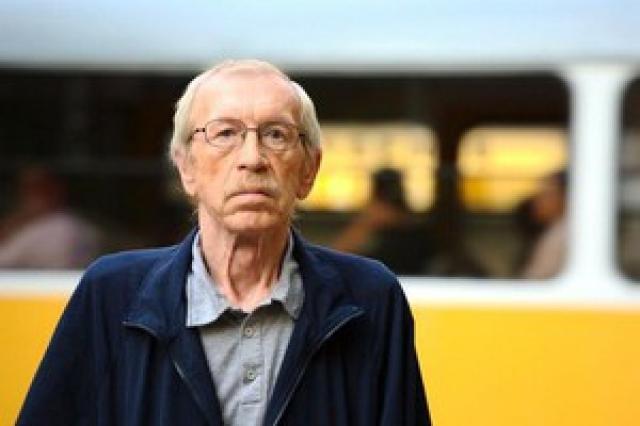
Igor Vuloh
 Russia
- Igor Vulokh: A Life in Abstraction
- Moscow and Artistic Awakening
- Recognition and Exhibitions
- Abstraction with Russian Elements
- Legacy and Influence
- Later Life and Death
Igor Vulokh: A Life in Abstraction
Early Life and InfluencesIgor Alexandrovich Vulokh was born in Kazan in 1938. As a child, he survived the harsh years of World War II, during which his father was killed in action and his mother fell ill, leading him to spend time in an orphanage. From an early age, Vulokh displayed a talent for art, impressing teachers and winning admission to the Kazan Art School in 1953.
Moscow and Artistic Awakening
Vulokh continued his education at the art department of the Moscow State Film Institute (VGIK). In Moscow, he met and befriended other artists and writers of the era, including Vasily Shukshin, Naum Kleiman, and Gennady Aigi. However, Vulokh left VGIK after just two years to pursue a career as a "free artist."
Recognition and Exhibitions
Despite not having graduated, Vulokh had already gained some recognition. In 1957, his landscape "Winter" was featured in the All-Union Art Exhibition. This was followed by the inclusion of his work in the 1960 exhibition "Monochrome Painting" in Germany. In 1961, Vulokh held his first solo exhibition in Moscow and became a member of the Moscow Union of Artists.
Abstraction with Russian Elements
Although he identified as an abstract artist, Vulokh's paintings contained subtle references to Russian landscapes. His "White Series," particularly, gained him international acclaim for its nuanced use of shades of white. Vulokh also created notable graphic works, including a series accompanying the Nobel Prize-winning poetry of Tomas Tranströmer and illustrations for the poems of Gennady Aigi.
Legacy and Influence
Igor Vulokh became one of the most significant Russian abstract painters of his time. His works were acquired by museums worldwide, including the Tretyakov Gallery in Moscow and the Russian Museum in St. Petersburg. Despite his success, Vulokh remained modest about his fame, attributing it to a "misunderstanding."
Later Life and Death
Vulokh died in Moscow in 2012 at the age of 75 after a long illness. He was survived by his three daughters from his three marriages. His art continues to be celebrated for its exploration of abstraction and its unique connection to the Russian landscape.


