Jean-Batist Vanloo
 France
- Jean-Baptiste Van Loo: A Journeyman of the Rococo Era
- Rococo Master and Portraitist
- The "Ennobling Portrait" in the Era of Rococo
- Van Loo's Mastery of Female Portraiture
- Masculine Portraits and the Rococo Aesthetic
- A Controversial Legacy
- A Masterpiece in the Hermitage
Jean-Baptiste Van Loo: A Journeyman of the Rococo Era
Early Life and InfluencesJean-Baptiste Van Loo was born in 1684 in Aix, France, into a renowned family of artists. He studied under his father, Louis Van Loo, and later became the mentor of his son, Louis-Michel. Like many painters of his time, Van Loo primarily worked on commission. He approached art as a skilled craft, adhering to the tastes of his patrons and avoiding overt expressions of individuality.
Rococo Master and Portraitist
Van Loo's artistic repertoire centered around mythological subjects and portraits of the aristocracy. Before settling in Paris, he worked in Italy, where he contributed to the ceiling frescoes at the Castle of Rivoli. From 1720, he received regular commissions in Paris, becoming a member of the Academy of Arts in 1731. Van Loo gained favor with the French court, including King Louis XV, who commissioned a portrait from him.
The "Ennobling Portrait" in the Era of Rococo
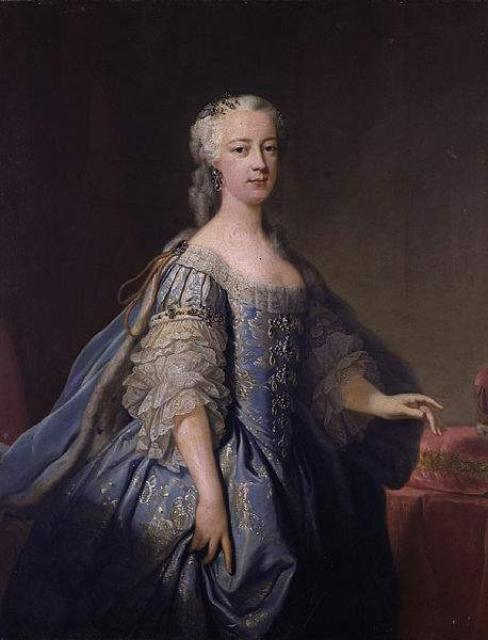
The memoirs of Giacomo Casanova provide a unique perspective on portraiture in the early 18th century. Casanova described three types of portraiture: the "resembling," which conveyed an accurate likeness; the "perfect," which idealized the subject; and the "flattering," which enhanced the subject's appearance. The latter, which appealed to Casanova the most, became prevalent in the Rococo era. Artists often painted portraits based on verbal descriptions or superficial sketches. Female patrons, eager to be portrayed as idealized beauties, contributed to the similarity of Rococo portraiture.
Van Loo's Mastery of Female Portraiture
Van Loo excelled in portraying women. He frequently depicted his subjects as elevated figures, embodying mythological goddesses or muses. This flattery was a subtle way to please the sitter. In his paintings, noblewomen engage in conversations with birds or hold jewels, projecting an air of sophistication and elegance.
Masculine Portraits and the Rococo Aesthetic
While more restrained in their approach to male portraits, Rococo painters prioritized the creation of stately and idealized images. They depicted subjects in opulent attire, showcasing the richness and splendor of velvets, silks, and lace.
A Controversial Legacy
Art historians have criticized Jean-Baptiste Van Loo, along with his contemporaries such as Jean-Marc Nattier and Louis Tocqué, for their superficiality and pandering to the aristocratic elite. However, their work reflects the prevailing attitudes and aesthetics of their time. They painted the outward masks of society, capturing the essence of a world where elegance and deception prevailed. Van Loo's portraits, by indulging his patrons, inadvertently reveal the conventions and artifice of Rococo society.
A Masterpiece in the Hermitage
The Hermitage Museum houses Van Loo's grand full-length portrait of Sir Robert Walpole, a prominent English statesman. The painting, acquired during the formation of the museum, depicts Walpole in ceremonial attire, showcasing Van Loo's mastery of color and texture.


