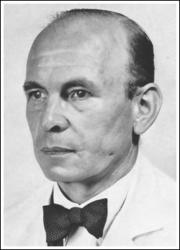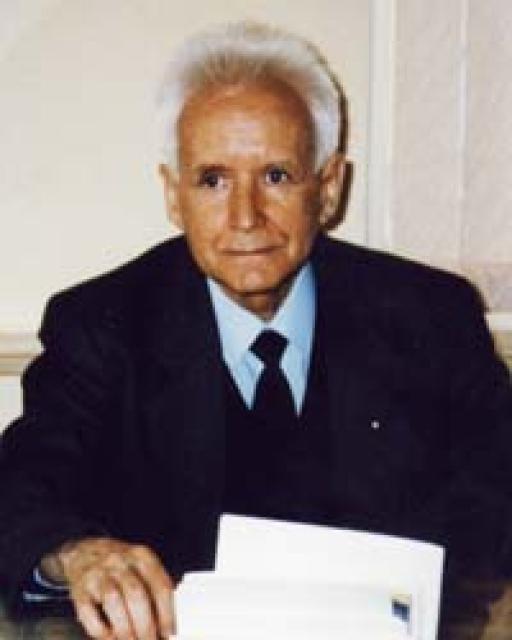
Ildar Akmaev
 Russia
- Early Life and Education
- Scientific Career
- Research Contributions
- Collaborations and Publications
- Leadership and Recognition
- Accomplishments and Legacy
Early Life and Education
Igor Grigorievich Akmaev was born on August 3, 1930, in Moscow, Russia. His father, Gani Fetkulovich Akmaev, was born in 1897 and passed away in 1964. His mother, Maryam Belyaevna Akmaeva, was born in 1908 and passed away in 1992.
In 1949, after graduating from high school, Akmaev enrolled in the medical faculty of the 2nd Moscow Medical Institute named after I.V. Stalin, which later became the N.I. Pirogov Russian National Research Medical University. He graduated with honors in 1955.
Scientific Career
While still a student, Akmaev developed a passion for experimental scientific research in the field of neurohistology, which he pursued under the guidance of Professor T.A. Grigorieva and Academician G.K. Khrushchev. His early work focused on the peculiarities of interneuronal connections in the peripheral autonomic nervous system.
After completing his doctoral studies in 1959, Akmaev continued his research under the supervision of Academician D.A. Zhdanov at the Laboratory of the Institute of Human Morphology of the USSR Academy of Medical Sciences. Later, he established and led his laboratory at the Institute of Experimental Endocrinology and Chemistry of Hormones of the USSR Academy of Medical Sciences.
Research Contributions
Akmaev's research centered on the structural foundations of the mechanisms of hypothalamic regulation of the endocrine system, particularly the pituitary gland as its central regulator and certain peripheral endocrine glands, such as the pancreas.
One of his significant contributions was the discovery of two hitherto unknown facts:
- The involvement of ependymal cells lining the infundibulum in hypothalamic regulatory mechanisms
- The establishment of a neural pathway connecting hypothalamic neurons to the beta cells of the pancreatic islets, mediating the regulation of insulin secretion
Collaborations and Publications
Akmaev's collaborations extended internationally. He translated the book "Hypothalamic Control of the Anterior Pituitary" by Academician Janós Szentágothai into Russian, bringing it to a wider audience. He also published research findings in international journals with Hungarian colleagues.
After defending his doctoral dissertation in 1975, Akmaev led a laboratory at the Institute of Experimental Endocrinology and Chemistry of Hormones. His research emphasized the interplay between the nervous, endocrine, and immune systems in neuroendocrine and neuroimmunoendocrine functions.
The results of Akmaev's investigations have been disseminated through monographs, such as "Structural Foundations of the Mechanisms of Hypothalamic Regulation of Endocrine Functions" (1979), "The Amygdaloid Complex of the Brain: Functional Morphology and Neuroendocrinology" (1993), and "Neuroimmunoendocrinology of the Hypothalamus" (2001), as well as in numerous articles published in domestic and international journals.
Leadership and Recognition
In 1988, Akmaev was elected a corresponding member of the USSR Academy of Medical Sciences. In 1994, he became an academician of the Russian Academy of Medical Sciences (RAMS) and deputy academic secretary of the RAMS Division of Medical and Biological Sciences. He was awarded the title of Honored Scientist of the Russian Federation.
Akmaev has served as director of the Institute of Experimental Endocrinology of the Endocrine Research Center (ERC) of RAMS, which emerged from the reorganization of the Institute of Experimental Endocrinology and Chemistry of Hormones. He is an active member of several scientific societies, including the Russian Anatomists', Histologists', and Embryologists' Society and the International Association of Morphologists.
Accomplishments and Legacy
Akmaev's research has significantly contributed to our understanding of neuroimmunoendocrine regulation, fostering the development of a new interdisciplinary field. His students hold prominent positions in Russia and neighboring countries, continuing to advance these areas of research.