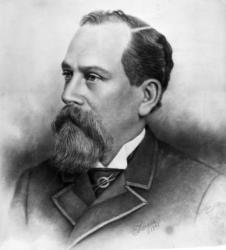
Imre Lakatos
 Great Britain
- Early Life and Education
- Persecution and Emigration
- Escape and Academic Career
- Methodology of Research Programmes
- Rationality and Scientific Progress
- Rational Reconstructions in the History of Science
Early Life and Education
Imre Lakatos, a Hungarian-born philosopher of science, was born in Debrecen, Hungary, to a Jewish family. As a student of György Lukács, Lakatos was a prominent figure in the anti-fascist resistance during World War II.
Persecution and Emigration
Due to the persecution of Jews, Lakatos changed his surname multiple times, first to Molnar (meaning "Miller" in Hungarian), and then to Lakatos (the surname of Prime Minister Géza Lakatos, who opposed the extermination of Hungarian Jews). After the war, he pursued his studies at Moscow University under the supervision of S. A. Yanovskaya, but was later imprisoned as a "revisionist" during the Rákosi era.
Escape and Academic Career
During the Hungarian Revolution of 1956, Lakatos fled to the West via Austria. He settled in the United Kingdom in 1958 and became a professor at the London School of Economics and Political Science in 1969. Lakatos passed away in 1974 at the age of 51 from a brain hemorrhage.
Methodology of Research Programmes
Lakatos developed the theory and methodology of scientific research programmes, extending Karl Popper's falsification principle to a more refined level. His theory aimed to understand the driving forces of scientific progress and challenged both Popper's methodology and Thomas Kuhn's theory.
According to Lakatos, science is a competitive struggle between "research programmes," consisting of a "hard core" of fundamental assumptions that cannot be refuted within the programme and a "protective belt" of ad hoc hypotheses that can be modified to accommodate counterexamples. A programme's evolution occurs through the modification of the "protective belt," while the collapse of the "hard core" theoretically leads to the abandonment of the programme in favor of a competing one.
Rationality and Scientific Progress
Lakatos viewed the growth of factual knowledge as the primary criterion for the scientific nature of a programme. As long as a programme yielded new knowledge, working within it was considered "rational." However, when a programme lost its predictive power and became reliant solely on "belts" of auxiliary hypotheses, Lakatos advocated abandoning it.
Rational Reconstructions in the History of Science
Lakatos applied his method of rational reconstructions to the history of science in his book Proofs and Refutations, examining the history of Descartes-Euler-Cauchy's theorem. Through this, he provided a broader narrative of the history of mathematics, particularly mathematical analysis and the programmes of mathematical foundations in the 19th and early 20th centuries.
While his book was not a traditional historical study, it employed a didactic dialogue to create a problem situation in which the concept of the "Eulerian polyhedron" emerged. Lakatos's rational reconstruction emphasized the rational explanation of scientific knowledge development, rather than reproducing the exact sequence of events.