Inga Andronikova
 Russia
- Early Life and Education
- Academic Career
- Conflict and Harassment
- Post-Institute Life
- Legacy and Controversies
Early Life and Education
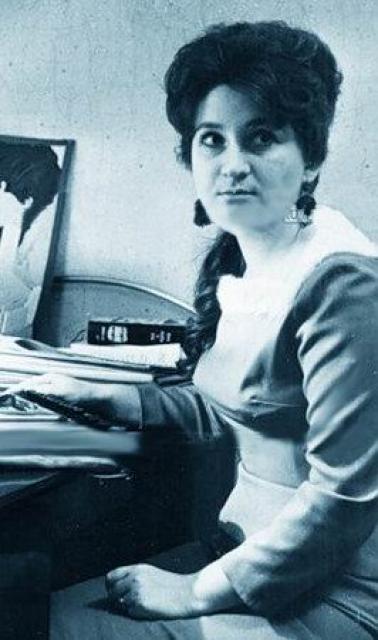
Inna Mikhailovna Andronikova was born on September 29, 1937, in Leningrad (now St. Petersburg), Russia. Her mother, Ekaterina Vasilyevna, was a folklore collector who instilled in her daughter a passion for цыган (Russian Roma) culture.
From a young age, Andronikova immersed herself in цыган society, collecting folk tales and songs. In the 1950s, she established a correspondence with renowned writer Lev Vasilievich Uspensky, who encouraged her literary pursuits.
Academic Career
After graduating high school in 1955, Andronikova entered the Faculty of Journalism at Leningrad University, receiving her journalism diploma in 1964. For her thesis, she researched "History of the Цыган Press in the 1920s-1930s."
Her work on цыган folklore culminated in the publication of "Skazki iduchikh za solntsem" (Tales of Sun Chasers) under the pseudonym "Inda Romani-Chai" in 1963. The book received critical acclaim and was widely read on Leningrad Radio.
Andronikova continued her academic pursuits by enrolling in the graduate program at the Institute of Ethnography (named after N.N. Miklukho-Maklay) in 1966. She shifted her focus to studying the material culture of the цыган, conducting ethnographic expeditions throughout the European part of Russia.
Conflict and Harassment
During her graduate studies, Andronikova faced significant opposition and harassment from the Institute of Ethnography. Despite the value of her research, her dissertation was rejected in 1969, allegedly due to political considerations and professional jealousy.
Undeterred, she continued her work as a researcher at the Leningrad branch of the Institute of Ethnography. However, her career was hindered by systemic discrimination and denial of opportunities.
Post-Institute Life
After losing her job at the Institute in 1973, Andronikova attempted to publish her work on цыган culture. Despite the uniqueness of her research, her books were repeatedly rejected by publishers.
In 1974, her home was raided and her extensive archive, including field research materials and her mother's folklore collection, was confiscated. This traumatic experience had a severe impact on her health, leading to a decline in her physical and mental well-being.
Legacy and Controversies
Andronikova died on October 3, 1994, leaving behind a complex legacy. While her contributions to цыган ethnography are undeniable, her work has been questioned by some researchers who suggest that she may not have been the sole collector of the vast archive attributed to her.
Her story stands as a testament to the challenges faced by women academics in the male-dominated field of ethnography and the suppression of knowledge that does not conform to established norms.
Despite the controversies and obstacles she encountered, Andronikova's work continues to inspire and inform scholars in the field of цыган studies, and her unwavering dedication to documenting цыган culture ensures that her legacy will endure.