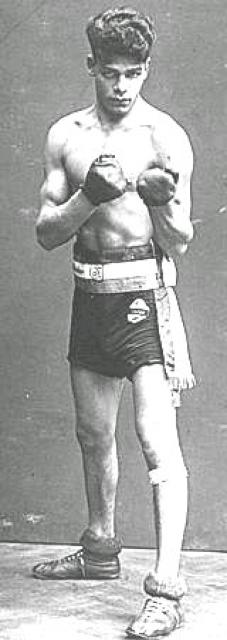
Iogann Trollman
 Germany
- Johann 'Gypsy' Trollmann: A Life in the Ring and Beyond
- Rise to Prominence
- 1933 Championship Controversy
- A Tragicomedy Under Nazi Rule
- Persecution and Internment
- Death in Neuengamme
- Legacy and Recognition
Johann 'Gypsy' Trollmann: A Life in the Ring and Beyond
Early Life and Boxing BeginningsJohann Wilhelm Trollmann, known as "Gypsy" Trollmann, was born into a modest Romani (Sinti) family in Wilsche, Lower Saxony. His childhood remains largely undocumented. As a young man, he developed a passion for boxing and joined the "Hero" sports club. Trollmann's Romani name was "Rukkeli," and he later became famous under both names.
Rise to Prominence
In the late 1920s, Trollmann's boxing prowess earned him recognition. He became known for his athleticism and innovative footwork, dubbed the "Trollmann Dance." His charm and good looks also made him popular with women. In 1929, he turned professional and embarked on a successful career that saw him defeat notable boxers in both the middleweight and light heavyweight divisions.
1933 Championship Controversy
In 1933, despite facing intense pressure, Trollmann fought for the German light heavyweight title. After six rounds, his opponent was clearly losing, prompting the Nazi-affiliated chairman of the German Boxing Association, Georg Radamm, to halt the fight and declare a draw. However, the furious crowd demanded Trollmann be crowned the winner, and Radamm reluctantly did so. Six days later, Trollmann received a letter stripping him of the title, citing "poor boxing."
A Tragicomedy Under Nazi Rule
Undeterred, Trollmann challenged for the German title once more. Before the bout, he was warned that using his signature "dance" tactics would result in disqualification. Determined to thwart Nazi propaganda, Trollmann turned the fight into a tragicomedy. He arrived with bleached hair and powdered skin, mocking the Nazi ideal of the "true Aryan." Despite enduring a barrage of punches from his powerful opponent, Trollmann stood his ground for five rounds before being knocked down.
Persecution and Internment
In 1935, Trollmann divorced his wife to protect her and their daughter from potential persecution. In 1938, he was forcibly sterilized along with thousands of other Romani people. The following year, he was drafted into the army, leaving his parents as hostages. By this time, his three brothers were already in concentration camps.
Death in Neuengamme
In 1941, Trollmann was declared unfit for active duty due to a war injury and sent to the Neuengamme concentration camp. There, he was subjected to abuse and used as a punching bag for SS training. In 1943, during one such session, Johann Wilhelm Trollmann was shot and killed.
Legacy and Recognition
In 2003, Trollmann's 1933 German light heavyweight championship title was officially restored, and the championship belt was presented to his heirs. In his hometown of Hanover, a street is named after "Gypsy" Trollmann, honoring his indomitable spirit and defiance against adversity. Despite his untimely demise, Johann Wilhelm Trollmann's name remains synonymous with courage, resilience, and the enduring power of the human spirit.