Iohann Baptist
 Austria
- Archduke John of Austria
- Military Campaigns
- 1809 Campaign
- Battle of Wagram
- Resistance in Tyrol
- Post-War Activities
- Scientific Pursuits
- Personal Life
- Political Re-Emergence
- Legacy
Archduke John of Austria
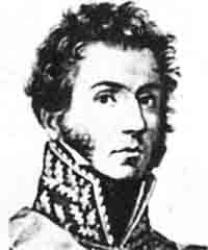
Childhood and Military EducationArchduke John of Austria, also known as Johann Baptist Josef Fabian Sebastian, was born on January 20, 1782, to Emperor Leopold II and Maria Luisa of Spain. From a young age, he exhibited a keen interest in military affairs, becoming recognized as the most talented military strategist among his siblings.
Military Campaigns
Napoleonic WarsIn 1795, John was appointed chief of the 1st Dragoon Regiment. He participated in several campaigns during the Napoleonic Wars, displaying exceptional personal bravery. However, he suffered defeats at the hands of French generals such as Jean Moreau at Hohenlinden in 1800.
1809 Campaign
In 1809, John led the Austrian army in Italy. He initially took Eugene de Beauharnais by surprise, capturing the fortress of Sacile. However, after news of Austrian setbacks in Germany and the arrival of reinforcements under Étienne MacDonald, John was forced to retreat.
Battle of Wagram
During the Battle of Wagram in 1809, John arrived on the battlefield after the main Austrian forces had been defeated. He held a strong position at Raab until June 14, when he was dislodged by Beauharnais.
Resistance in Tyrol
After the war, John spent his time in Tyrol, where he supported resistance to French occupation. He organized a local militia and coordinated guerrilla warfare tactics.
Post-War Activities
Chief Director of EngineeringFollowing the end of the fighting, John was appointed Chief Director of Engineering. He played a crucial role in improving the country's infrastructure, overseeing the construction of roads, canals, and fortifications.
Scientific Pursuits
John had a keen interest in science and nature. He traveled extensively, conducting research in archaeology, geology, and botany. He expanded the collections of the University of Innsbruck and facilitated research expeditions throughout the region.
Personal Life
Morganatic MarriageIn 1823, John married Anna Plochl, the daughter of a postal clerk. Despite the disapproval of his family, she was granted the title Countess of Meran. Their descendants, including conductor Nikolaus Harnoncourt, continue to carry on John's legacy.
Political Re-Emergence
In 1848, John re-entered politics during the revolutionary uprisings. Emperor Ferdinand appointed him governor of Vienna, and he was elected Imperial Vicar by the National Assembly in Frankfurt. He served in this role until 1849, overseeing the establishment of the German Confederation.
Legacy
Archduke John of Austria is remembered as a skilled military commander, a visionary reformer, and a passionate advocate for science and education. His contributions to Tyrolean resistance, infrastructure development, and the pursuit of knowledge continue to shape Austrian history. A monument in his honor stands in Graz, Austria.