Irina Asmus
 Belarus
- Biography of Irina Asmus
- Early Life and Passion for Performing
- Circus Career
- Transition to Theater
- Theater Success
- Return to Circus
- Circus Routine and Fame
- Television and Tragic End
- Conclusion
Biography of Irina Asmus
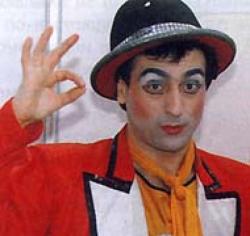
IntroductionIrina Asmus, a talented actress and clown, was drawn to the circus arena despite her successful career in the theater. She believed that talented individuals excel in various fields, and she wanted to explore her potential as a circus artist. This decision led her to embark on a new chapter in her life.
Early Life and Passion for Performing
From a young age, Irina Asmus dreamed of becoming an actress, but she was unsure of which type - a dramatic, variety, or circus performer. Due to her family frequently moving from city to city, she was unable to attend any specific performing arts classes and settled for occasional lessons instead. However, Irina was determined to pursue her passion, and she applied to the Choreographic School of the Bolshoi Theatre. Although she almost succeeded, she was informed that her height would hinder her future as a dancer. Undeterred, she decided to enroll in a circus school instead.
Circus Career
During her entrance exams, the young Irina impressed the admissions committee with her energetic Neapolitan dance and a spirited performance of the popular song "Besame Mucho." She was accepted into the State School of Circus and Variety Arts. After completing her training, she performed as an equilibrist on stilts, showcasing various tricks under the guidance of L. Kostyuk.
Transition to Theater
Unfortunately, Irina suffered a serious injury during rehearsals, and doctors advised her to refrain from performing at heights. This setback led her to rediscover her love for the theater. Without hesitation, she joined the drama studio at the Leningrad Youth Theatre, entering directly into the second year of the program.
Theater Success
In the Theatre of V.F. Komissarzhevskaya, Irina had the opportunity to showcase her talent in the play "Vremya Lyubit" by B. Laskin, portraying the character of Masha. This role allowed her to demonstrate her skills as a dramatic actress, singer, and dancer. She went on to portray iconic characters such as Juliet, Cinderella, Princess Elizabeth in "The Prince and the Pauper," and Raymonda in "Romance for Adults." Irina attracted the attention of critics and received praise in Leningrad newspapers.
Return to Circus
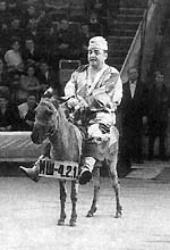
Despite her theater success, Irina couldn't resist the allure of the circus arena. She made the difficult decision to return to the circus and became a solo clown. Solo clowns, as the name suggests, perform alone in the center ring, which is an honor but also a challenging endeavor. For Irina, the word "difficult" was an invitation rather than a deterrent, propelling her towards new heights.
Circus Routine and Fame
Renowned circus director Sergey Dityatev, a graduate of the directing department at GITIS, wrote and directed a program specifically for Irina. Her routines included a scene called "Let There Be Light!" where she revived a dimly lit circus with her breath, symbolizing the power of light. Another beloved clown act of hers was "The Trainer," in which she satirically depicted women obsessed with telephone conversations, amusing the audience with her "trained snake" and humorous interactions.
Television and Tragic End
In the 1970s, Irina gained significant recognition through her role as one of the main characters in the children's television show "ABVGDeyka." She also appeared in the Leningrad Television program "Diskoteka" and took part in documentary films such as "Presentation" and "Iris at the Circus." However, in her final months, Irina faced challenges. She was unexpectedly replaced in "ABVGDeyka," a role that had endeared her to children across the Soviet Union. Sadly, Irina Asmus lost her life during a performance in Gomel. Her death was a tragic accident when a malfunctioning rotation mechanism caused her to fall from a height of eight meters.
Conclusion
Irina Asmus, known as Iriska the clown, led a vibrant but short life that shimmered brightly before fading into the darkness. Her journey from the theater to the circus showcased her versatility and dedication to performing. Irina left an indelible mark on both the theater and circus worlds, captivating audiences with her talent and leaving a legacy as a beloved clowness.