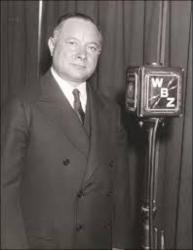
Irvin Jackobs
 USA
USA- Erwin Jacobs and the Rise of Qualcomm
- Humble Beginnings
- The Birth of Linkabit
- Founding Qualcomm
- Recognition and Renown
- CDMA's Triumph
- Global Expansion and Recognition
- Fabless Success
- Ups and Downs
- The Quest for Wireless Dominance
- Qualcomm's Late Entry
- Challenges Ahead
Erwin Jacobs and the Rise of Qualcomm
At the tender age of 71, former college lecturer Irwin Jacobs has transformed Qualcomm into a colossal research laboratory, birthing the CDMA mobile communication technology enjoyed by 71 million people worldwide. Rather than a "rags to riches" tale, Jacobs' journey is more aptly described as an "interesting story," as it chronicles a company that has continually contracted yet simultaneously strived for industry dominance.

Humble Beginnings
In the early 1950s, high school guidance counselor advised a young Erwin Jacobs, claiming that a future in science and technology held no promise. Heeding this advice, Jacobs enrolled in the Cornell Hotel School. However, there was zero chance of Jacobs auditing Holiday Inn's accounts. Instead, he founded Qualcomm Inc. in 1985.

Growing up as a child of working-class parents, Jacobs' wartime childhood was marked by resourcefulness. He built a milk-bottling machine from discarded materials. His entrepreneurial flair also emerged during this period, where he purchased surplus photographic film and chemicals to provide photo services to classmates.
During his time at Cornell, Jacobs felt no passion for the hospitality industry. In fact, he was drawn to electrical engineering. He shifted to the engineering department, followed by three years in the Massachusetts Institute of Technology, specializing in electrical engineering. The university later offered him a position as a professor.
The Birth of Linkabit
In 1966, Jacobs was offered a teaching post at the University of California, San Diego. Joining his wife and four sons, he ventured westward. He purchased land in La Jolla, near San Diego, and has resided there ever since. (The plot overlooking La Jolla and the Pacific Ocean, purchased in 1968 for $37,000, is now worth millions.)
It was during this period, in 1969, that Jacobs founded Linkabit, a satellite communications company. Many link Linkabit's emergence with the birth of a formidable wireless telecommunications industry in San Diego. Despite the city's bustling atmosphere, the constant roar of military aircraft did not deter Jacobs. In fact, the thunder of jet fighters strummed a familiar tune for Jacobs, as contracts with the US military became Linkabit's earliest source of revenue, mirroring the experience with Qualcomm.
In their nascent stages, both companies predominantly employed former military engineers. Qualcomm's CDMA technology itself originated from battlefield radio technology. Jacobs was always fiercely competitive. Linkabit was once tasked with assembling a demonstration piece for the military in four days and three nights. While the team sacrificed sleep to meet this deadline, Jacobs remained steadfast and sleepless. To this day, Jacobs' approach to problem-solving epitomizes this level of commitment.
Founding Qualcomm
In 1980, Jacobs merged Linkabit with M/A-Com, and five years later, he established Qualcomm. His mission was clear: position the company and its CDMA technology at the forefront of digital wireless technology.
Jacobs, now 66, was always more passionate about technology than marketing. When he founded the company in 1985, he did not have a specific product in mind. However, he named it Qualcomm, an amalgamation of "quality communications."
Today, the former university professor has turned Qualcomm into a sprawling research laboratory. Here, the CDMA mobile communication technology was born, serving 71 million users worldwide.
Recognition and Renown
In 1994, then-US President Bill Clinton awarded Jacobs the National Medal of Technology. Qualcomm is often hailed as San Diego's most successful company, creating thousands of millionaires among its employees and local residents. Jacobs himself is a billionaire.
Despite this acclaim, Jacobs has always maintained a low profile. While the University of California, San Diego's engineering school and the local public radio station's broadcast center bear his and his wife Joan's names, their family life remains private and modest.
Jacobs continues to be an enigma in his hometown. He lacks the public profile of industry peers like Andy Grove, Larry Ellison, or Steve Jobs. Despite achieving similar heights, Jacobs' fame is confined to the wireless industry. Several factors contribute to this obscurity: San Diego's relatively sheltered status in the tech world and Jacobs' avoidance of endless conferences in Silicon Valley. Instead, he tirelessly championed Qualcomm's CDMA technology as the global standard for wireless communication.
CDMA's Triumph
In 1989, AT&T, Motorola, and others advocated for the TDMA (Time Division Multiple Access) digital standard. Jacobs countered, promoting his CDMA (Code Division Multiple Access) technology. It boasted threefold the capacity of TDMA and far surpassed analog systems. This was achieved by distributing digitized speech into data packets. Each packet, spread across the entire bandwidth, was assigned a unique code and reassembled at the receiving end. This eliminated temporal division, allowing all users simultaneous access to the entire channel. The concept mirrored the efficiency of the Internet.
Developing an exceptional technology was one challenge; persuading others to use it was another. Here, Qualcomm faced a branding disadvantage.
As the wireless industry gained traction, a shift in the rules of the game opened doors for Qualcomm. The US government auctioned new radio frequencies for cellular carriers, enabling new entrants to test out different technologies. Major players embraced CDMA. PacTel (later AirTouch) signed the first contract with Qualcomm in 1993, followed by Sprint and others.
Global Expansion and Recognition
Nations venturing into wireless networks quickly adopted CDMA. The first commercial CDMA system, in fact, premiered not in the US but in Hong Kong in 1995. CDMA swiftly rose as the third most popular wireless technology globally, trailing GSM (dominant in Europe) and TDMA (dominant in the Americas). As of 2000, CDMA had 60 million subscribers, capturing 13% of the global market. More significantly, CDMA was the fastest-growing of the three technologies, with subscribers increasing by 118% in 1999.
Jacobs became a vocal advocate for his technology. Once wary of public speaking, his passion for CDMA transformed him into a persuasive orator. Critics accused the former professor of aggression and exaggeration, and he often avoided compromise.
Fabless Success
Qualcomm stands as the world's largest semiconductor company without a fabrication facility. Rather than investing billions in manufacturing plants, Qualcomm designs chips and contracts with others, primarily IBM, to produce them. This approach distinguishes Qualcomm from industry giants like AMD, Intel, Motorola, TI, and others.
Qualcomm's "fabless" model allowed it to focus on chip design, boosting sales and revenue. It also led to the demise of some competitors. While players like Oki Electric, LG Electronics, and Sony previously manufactured CDMA-enabled chips for their phones, they now purchase chips from Qualcomm. This is because Qualcomm expanded its technology offerings, such as subscriber location and MP3 playback capabilities.
Ups and Downs
While Qualcomm thrived in chip development, it endured a period of setbacks in producing equipment supporting CDMA. As the sole provider of CDMA technology initially, Qualcomm had to supply cellular carriers with all necessary equipment, including antennas, switches, base stations, and phones. Being a relatively small player, Qualcomm could not compete with major manufacturers in these areas.
In 1999, Qualcomm sold its equipment manufacturing unit to Ericsson and its handset production facilities to Kyocera, a Japanese electronics manufacturer. In recent years, Qualcomm has divested nearly all manufacturing operations, including plans to part with its semiconductor division.
The Quest for Wireless Dominance
Every ambitious entrepreneur dreams of claiming a new kingdom. The wireless realm is no exception. Industry stalwarts like Qualcomm, Motorola, Sun Microsystems, Nokia, Microsoft, and even chip giant Intel seek to replicate the dominance of Windows in the PC world, becoming a universal standard for wireless device developers.
Envisioning a billion-dollar future, many tech companies aim to establish their own software standard for wireless devices. Establishing such a standard could ensure revenue streams even if sales of mobile phones, currently the most prevalent wireless devices, decline.
In the 1980s, Microsoft and Intel, with Windows and processors, respectively, ruled the personal computer market. The victor in the wireless battle could emerge as the next "Wintel." With the mobile phone market dwarfing that of computers, the stakes are astronomical.
Qualcomm's Late Entry
In late January, Qualcomm entered the battle for wireless supremacy, the last of the major contenders. The company unveiled a technology allowing developers to write programs compatible with handsets from various manufacturers. Qualcomm aims to transform the current landscape, where developers primarily create software for specific phone models.
This platform, called BREW (binary runtime environment for wireless), will empower cellular users to receive news alerts, listen to internet radio, and engage in online gaming. Analysts acknowledge Qualcomm's wise move to join the wireless software race.
Challenges Ahead
Qualcomm faces hurdles in this new endeavor. Traditionally known for its cellular chips, the company must convince phone manufacturers, carriers, and software developers to embrace its new and potentially disruptive play.
According to Qualcomm's Vice President Peggy Johnson, the first BREW-enabled phones are expected in late 2001. However, widespread adoption is unlikely before the rollout of third-generation cellular networks, which are still several years away.
Initially, Qualcomm will bundle BREW only with its CDMA chips, offering access to new software applications exclusively to CDMA cellular users. However, other cellular systems could potentially provide access to BREW.
Qualcomm plans to patent BREW and charge a royalty fee (undisclosed) to developers for software creation. Wireless carriers are also expected to generate revenue by billing users