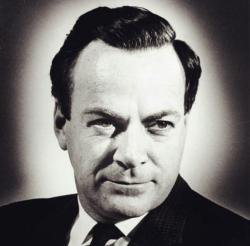
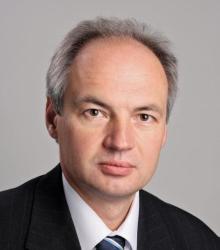
Isidor Raby
 USA
- A curious boy in Brooklyn
- A new way to study the atom
- Radar, the Manhattan Project, and public service
- Family, teaching, and a lasting influence
Isidor Isaac Rabi rose from an immigrant childhood in Brooklyn to become one of the most influential physicists of the twentieth century. His breakthrough method let scientists measure the magnetic properties of atomic nuclei with unprecedented precision, earning him the 1944 Nobel Prize in Physics. The same line of research eventually helped make magnetic resonance imaging possible, though that medical technology was developed by later researchers.
A curious boy in Brooklyn
Born Israel Isaac Rabi on July 29, 1898, in Rymanów, then part of Austria-Hungary, he arrived in the United States as an infant with his family. They settled in New York, where he grew up in a working-class Jewish immigrant community. His mother encouraged him to ask questions; he later recalled that her after-school question was not simply whether he had learned something, but whether he had asked a good question. It was a small prompt that matched the instinctive curiosity he brought to science.
At Cornell University, Rabi first studied chemistry, earning his bachelor’s degree in 1919. He went on to Columbia University for graduate study in physics and completed his doctorate in 1927. A fellowship then took him to Europe, where he worked with leading physicists including Niels Bohr, Wolfgang Pauli, Werner Heisenberg, and Otto Stern. He returned to the United States in 1929 and joined Columbia’s faculty, becoming a full professor in 1937.
A new way to study the atom
Rabi’s most influential work began with a question about the inner structure of matter. At Columbia, he refined the molecular-beam technique, sending atoms through magnetic fields and exposing them to radio-frequency energy. When the energy matched a natural frequency of the atoms, they responded in a way that revealed the magnetic moments of their nuclei. The method offered a remarkably precise window into atomic behavior and became a landmark of experimental physics.
The work earned Rabi the Nobel Prize in Physics in 1944, awarded “for his resonance method for recording the magnetic properties of atomic nuclei.” Nuclear magnetic resonance later became a powerful research technique in chemistry and physics; subsequent advances by other scientists adapted the principle for medical imaging. Rabi himself eventually underwent an MRI scan, a striking personal link to the technology his early research had helped set in motion.
Radar, the Manhattan Project, and public service
During World War II, Rabi became associate director of MIT’s Radiation Laboratory, where he worked on radar. He declined J. Robert Oppenheimer’s offer to become deputy director at Los Alamos, believing the radar work was a more immediate contribution to the war effort. He still served as a consultant to the Manhattan Project and visited Los Alamos, including for the 1945 Trinity test.
After the war, Rabi took an increasingly public role in debates over science and government. He opposed a crash effort to build the hydrogen bomb and supported international control of atomic energy. He chaired the Atomic Energy Commission’s General Advisory Committee and advised President Dwight Eisenhower on science. He also helped establish Brookhaven National Laboratory and CERN, reflecting his conviction that science could be a shared international undertaking.
Family, teaching, and a lasting influence
Rabi married Helen Newmark in 1926; they had two daughters. He remained at Columbia for most of his career, mentoring generations of students and helping shape the university’s physics department into a leading center for research. After retiring from teaching in 1967, he continued to take an active interest in physics and science policy.
He wrote about science and society in *My Life and Times as a Physicist* and *Science: The Center of Culture*, arguing that scientific discovery belonged within a broader cultural conversation. Rabi died in New York on January 11, 1988, at age 89. His legacy rests both on a precise experimental method that transformed atomic physics and on a lifelong insistence that scientists should take responsibility for how knowledge is used.