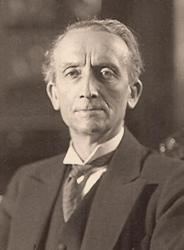
Israel Ori
 Armenia
- Biography of Israel Ori
- Efforts in Germany and Austria
- Secret Meeting and Appeal
- Russian Support
- Program and Mission to Persia
- Final Years and Death
Biography of Israel Ori
Israel Ori was a prominent figure in the Armenian liberation movement and a diplomat. He was born in 1658 in the village of Sisian in Armenia. He was the son of one of the Armenian princes - meliks. In his youth, he was part of a delegation seeking support from European powers in the struggle of Armenians against Iranian and Turkish rule. He visited Constantinople, Venice, Paris, and Vienna. Later, he served in the French army and established contacts with high political circles in France, constantly raising the issue of the liberation of the Armenian people from foreign rule, but only encountering indifference.
Efforts in Germany and Austria
In 1695, Ori settled in Dusseldorf, Germany, and established connections with the Elector Palatine Johann Wilhelm. Wanting the Armenian question to be discussed in the highest diplomatic circles of European states, the German prince sent Ori with recommendation letters to the Emperor of Austria and the ruler of Florence. However, since Ori did not have official authorization from Armenian political circles, his statements were ignored. On the advice of Johann Wilhelm, Ori returned to his homeland to obtain the necessary written authorization from the Armenian nobility.
Secret Meeting and Appeal
In 1699, Ori, along with Melik Safraz, convened a secret meeting of eleven meliks from Syunik in Angehakot (Armenia), where they issued an appeal to several Western European states for assistance. Failing to achieve results in Germany and Austria, Ori traveled to Moscow in 1701 seeking support.
Russian Support
It should be noted that Ori's orientation towards the Russian state played an important role in the history of the Armenian liberation movement, solidifying pro-Russian sentiments in Armenian political circles. Upon arriving in Moscow, Ori presented Peter the Great with an appeal from the meliks, asking the tsar to have compassion for the Armenian people and free them from Turkish-Persian rule. "We have no other hope," they wrote, "we rely on God and your country." Peter the Great responded favorably to the Armenian diplomat's request and promised to assist the Armenian people after the end of the Russo-Swedish war.
Program and Mission to Persia
Ori proposed his program to the Russian court, which included, among other things, the deployment of a 25,000-strong Russian army (15,000 mounted Cossacks and 10,000 infantry) to the South Caucasus for the liberation of the Armenian and Georgian peoples. The cavalry would move through the Daryal Gorge, while the infantry would be transported from Astrakhan via the Caspian Sea. The Russian forces would be greeted by Armenian and Georgian armed units. Thus, in the early 18th century, the question of a campaign to the South Caucasus was raised at the Russian court. In this regard, it was deemed necessary to send a special embassy to Persia under Ori's leadership to study the situation, assess the sentiments of the people, gather information about fortresses and roads, and so on. To avoid arousing suspicion, it was decided to present the case as if Ori, being authorized by the Roman Pope, was going to Shah Hussein to alleviate the plight of Persian Christians.
Final Years and Death
In 1707, after necessary preparations, Ori, in the rank of colonel in the Russian army and with a large entourage, solemnly set off for Persia. The French missionaries there actively tried to hinder the embassy's arrival in Isfahan, attempting to convince the Shah that Russia intended to restore Armenia's political independence and that Ori was the person destined to reign in Armenia, and so on. While in Shamakhi, Ori had to wait for a long time for the Shah's permission to travel to Isfahan. In Shamakhi, he met with prominent Armenian, Georgian, and Azerbaijani political figures, inspiring them and striving to strengthen the population's sympathy towards Russia. In 1709, Ori arrived in Isfahan and then traveled to Shamakhi, where he again held negotiations with local political figures. In 1711, Ori suddenly passed away in Astrakhan during his return to Russia from Persia.