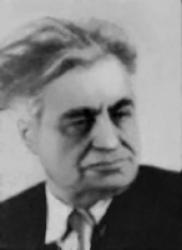
Ivan Annenkov
 Russia
- Biography of Ivan Annenkov
- Early Life and Education
- Military Career
- Involvement in Societies
- Arrest and Exile
- Life after Exile
- Family
Biography of Ivan Annenkov
Ivan Alexandrovich Annenkov was a Decembrist and the son of Alexander Nikanorovich Annenkov and Anna Ivanovna Yakobiy. He was born in Moscow, into a noble family. His father, Alexander Nikanorovich Annenkov, was a State Councillor and retired captain of the Preobrazhensky Regiment. His mother, Anna Ivanovna Yakobiy, was the daughter of Ivan Varfolomeevich Yakobiy, the governor-general of Irkutsk.
Early Life and Education
Ivan Annenkov received his education at home, under the tutelage of his Swiss tutor, Dubois, and French tutor, Berge. From 1817 to 1819, he attended lectures at Moscow University, but did not complete the course.
Military Career
In 1819, Ivan joined the service as a junior officer in the Cavalier Guard Regiment, after passing an examination at the General Staff. He rose through the ranks, becoming a cornet in December 1819 and a lieutenant in March 1823. At the time of his mother's death, he had an estate in the Vologda Province with 418 serfs, which later reduced to 2,300 serfs across various provinces.
Involvement in Societies
In 1824, Ivan Annenkov became a member of the Petersburg branch of the Southern Society and participated in the activities of the Northern Society.
Arrest and Exile
On December 19, 1825, Ivan Annenkov was arrested in the barracks of his regiment. He was held in the city guardhouse and then transferred to the Vyborg Fortress. Later, he was taken to the Peter and Paul Fortress in St. Petersburg and assigned to the Nevsky Curtain (Number 19). In 1826, he was sentenced to 20 years of hard labor in Siberia, which was later reduced to 15 years. He was sent to the Chita Ostrog in December 1826 and arrived at the Petrovsky Zavod in September 1830. Ivan's sentence was further reduced to 10 years, and he was released from hard labor in December 1835. He was allowed to settle in the village of Belskoye, in the Irkutsk Province.
Life after Exile
In 1838, Ivan Annenkov was transferred to Turinsk, in the Tobolsk Province. In 1839, he was permitted to serve in the civil service in Siberia, working as a registrar in the Turin Zemstvo Court. He later joined the Tobolsk General Provincial Administration and held various positions, including revisor of the Tobolsk expedition for exiles and secretary of the Tobolsk Order of Public Assistance. In 1854, he was promoted to collegiate secretary for his distinguished service. After being granted amnesty in 1856, Ivan became a titular councillor and was appointed to special duties under the Nizhny Novgorod Governor. He also served as the leader of the local gentry for several terms, actively participating in the preparation and implementation of the Emancipation Reform of 1861. In 1865 to 1868, he served as the chairman of the Nizhny Novgorod Zemstvo Administration. Ivan Annenkov passed away in Nizhny Novgorod and was laid to rest in the Cross-Exaltation Monastery. In 1953, his remains were transferred to the Bugrovskoe Cemetery.
Family
Ivan Annenkov married Praskovya (Pauline) Yegorovna Gueble in April 1828. He had a brother, Grigory, who was killed in a duel in 1824, and a sister named Maria.