Ivan Korostovets
- Early Life and Career
- Entering Diplomacy
- China and the Boxer Rebellion
- Consul in Tianjian
- Consul General in Persia
- Minister to China
- Russo-Mongolian Agreement
- Scandal and Dismissal
- Diplomatic Recovery
- Later Years
- Emigration and Death
Early Life and Career
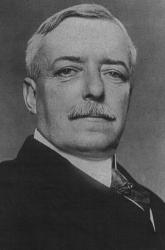
A Noble DiplomatIvan Ivanovich Korostovets was a Russian diplomat and orientalist born into nobility in the Poltava Governorate. He graduated from the prestigious Imperial Alexander Lyceum in 1884.
Entering Diplomacy
Korostovets' diplomatic career began in the Asian Department of the Ministry of Foreign Affairs. By 1890, he was appointed Second Secretary of the diplomatic mission in Beijing. He later served as Secretary of the mission in Rio de Janeiro (1894) and Lisbon (1896).
China and the Boxer Rebellion
Duty in Port ArthurIn 1899, Korostovets was assigned as a diplomatic officer in the Kwantung Oblast. He served in Port Arthur, where he witnessed the Boxer Rebellion firsthand.
Consul in Tianjian
During the rebellion, Korostovets was sent to Tianjin with Vice Admiral E. I. Alekseev's staff. In the absence of a consul, he temporarily managed Russian consular affairs from August 5 to September 7, 1901.
Consul General in Persia
Returning to diplomatic service, Korostovets was appointed Consul General in Bushire in April 1902. Later, he participated in the Russian delegation at the Portsmouth Peace Conference with Japan in 1905.
Minister to China
Appointment as MinisterFollowing the death of Russian Minister to China D. D. Pokotilov, Korostovets was chosen as his successor in 1908. He was tasked with pursuing a friendly policy towards China while protecting Russia's interests.
Russo-Mongolian Agreement
In 1912, Korostovets was entrusted with a diplomatic mission to Urga (now Ulaanbaatar), where he signed an agreement recognizing the autonomy of Outer Mongolia. This act marked a significant diplomatic success for Imperial Russia.
Scandal and Dismissal
Romantic InvolvementKorostovets' career was marred by a scandal involving his affair with a young woman named Angelina Piri. This led to his dismissal from his post in 1913.
Diplomatic Recovery
Despite the scandal, Korostovets negotiated the situation and was allowed to continue his diplomatic career. He served as Minister to Persia from 1913 to 1915.
Later Years
Member of Foreign Ministry CouncilAfter the dismissal, Korostovets became a member of the Council of the Ministry of Foreign Affairs. He refused to collaborate with the Bolsheviks after the October Revolution.
Emigration and Death
Korostovets emigrated to Finland and later resided in Berlin. He published his memoirs in Beijing in 1921. He passed away in Paris in 1933.