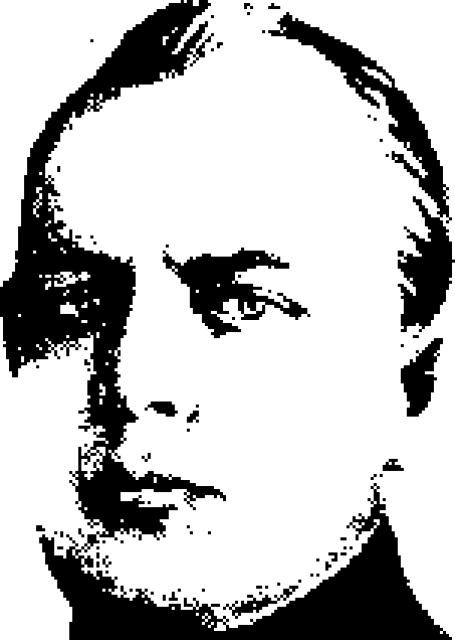
Ivan Pavlunovskiy
 Russia
- Early Life and Revolutionary Activities
- Military Service and the Revolution
- Career in the Cheka
- Key Assignments
- Siberian Missions
- Later Career and Purge
Early Life and Revolutionary Activities
Ivan Petrovich Pavlunovsky was born on August 4, 1888, in Rzhava, Fatyezhsky Uyezd, Kurylandskaya Governorate (today Bryansk Oblast, Russia). The son of a government employee, he received his education at a school for ensigns. In 1905, he joined the Russian Social Democratic Labor Party (RSDLP) as a Bolshevik.
Military Service and the Revolution
During World War I, Pavlunovsky served as a sub-lieutenant. Following the February Revolution in 1917, he became chairman of the Petergof Soviet and later the Petrograd Soviet. He also served as member of the Petrograd Military Revolutionary Committee.
Career in the Cheka
In late 1917 and early 1918, Pavlunovsky led a detachment in Ukraine and Belarus, participating in punitive actions. From 1918 onwards, he worked in the organs of the Cheka, the Soviet secret police.
As Deputy Head and later First Deputy Head of the Special Department of the All-Russian Extraordinary Commission (VChK), Pavlunovsky played a significant role in combating desertion, taking hostages (including family members of officers mobilized into the Red Army), and conducting bloody investigations.
Key Assignments
Pavlunovsky was entrusted with high-profile assignments, including:- Supressing the Kronstadt Uprising in 1919
- Investigating the revolt at the "Krasnaya Gorka" and "Seraya Loshad" forts
- Arresting military specialists at the Field Headquarters of the Red Army
- Liquidating the "National Center" and the "Volunteer Army of Moscow District"
Siberian Missions
From January 1920, Pavlunovsky served as the plenipotentiary representative of the VChK in Siberia and a member of the Siberian Bureau of the Central Committee of the RCP(b). He initiated the "Union of Working Peasants" case, leading to mass arrests.
Later Career and Purge
Pavlunovsky held various leadership positions in Transcaucasia (1926-28) before becoming Deputy People's Commissar for Workers' and Peasants' Inspection of the USSR (1928). He was also a member of the Presidium of the Supreme Council of the National Economy (1930) and Deputy People's Commissar for Heavy Industry (1932).
In 1937, Pavlunovsky was arrested and sentenced to death for alleged counter-revolutionary activities. He was shot on October 30, 1937, and rehabilitated in 1955.



