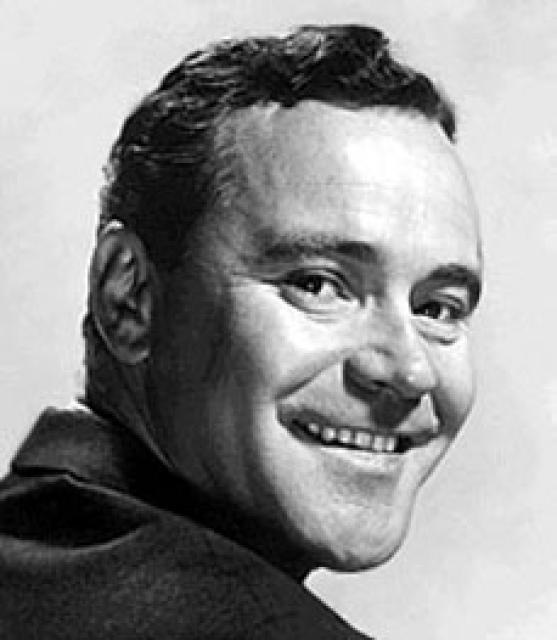
Jack Lemmon
 USA
USABiography of Jack Lemmon
Jack Lemmon (1925-2001) was an American actor known for his remarkably wide range of roles, from sharply characterized to tragic. He was nominated for the Academy Award seven times for Best Actor and made history by becoming the first actor to win in both the Leading Role (1973) and Supporting Role (1955) categories. He was twice named Best Actor at the Cannes Film Festival, in 1979 and 1982. Lemmon was one of the few Hollywood actors who could boast a Harvard diploma. He first caught attention while in university and later served in the Navy during the last months of World War II. In his youth, he worked extensively in radio and television. His first film role was in the comedy "It Should Happen to You" (1954). The following year, he won an Oscar for Best Supporting Actor in the war drama "Mister Roberts" (1955). Although Lemmon had no shortage of offers after such a promising start, most of them were roles that he described as "whirlwind clowns." It was esteemed director Billy Wilder who recognized the true depth of Lemmon's talent and offered him the lead role in his new comedy "Some Like It Hot" (1959). Lemmon's portrayal of Jerry (Daphne) was a triumph, earning him another Oscar nomination and making him a household name worldwide. After that, Lemmon starred in many of Wilder's films, up until their last collaboration in 1981. He was again nominated for an Oscar for Wilder's social comedy "The Apartment" (1960), which was named Best Picture by the Academy. While embodying the director's sardonic vision of a society where everything is bought and sold, Lemmon also accepted offers from other filmmakers. One of the most important roles in his life was that of an alcoholic in Blake Edwards' socially charged drama "Days of Wine and Roses" (1962), which earned him yet another Oscar nomination. In 1964, Lemmon starred in the play "The Odd Couple" alongside actor Walter Matthau, who became his close friend. Lemmon and Matthau went on to star in ten films together, starting with "The Fortune Cookie" (1966) and the film adaptation of "The Odd Couple" (1968), and ending with "Grumpy Old Men" (1993) and its sequel "Grumpier Old Men" (1995). Over thirty years, Lemmon and Matthau became one of the most recognizable and beloved comedy duos in American film history. In the 1970s, Lemmon's repertoire continued to be dominated by roles of "everyman" characters who found themselves in unimaginable situations and had to painfully extricate themselves. This category includes the film adaptation of Neil Simon's play "The Prisoner of Second Avenue" (1972). The following year, Lemmon finally won his second Oscar for the leading role in the drama "Save the Tiger," in which he agreed to work almost for free. From the second half of the 1970s, Lemmon's appearances on the big screen were rather episodic. One of his most tragic roles, in the film "The China Syndrome" (1979) directed by Michael Douglas, earned him the award at the Cannes Film Festival. He received a similar honor for his next major work, "Missing" directed by Costa-Gavras. In 1998, he was nominated for an Emmy Award but lost to Ving Rhames, who immediately called Lemmon from the audience and presented him with the statue as the more deserving contender.
Filmography
- 1959 - Some Like It Hot
- 1960 - The Apartment
- 1965 - The Great Race
- 1966 - The Fortune Cookie
- 1967 - Luv
- 1977 - Airport '77
- 1980 - Tribute
- 1989 - Dad
- 1993 - A Life In The Theatre
- 1997 - 12 Angry Men