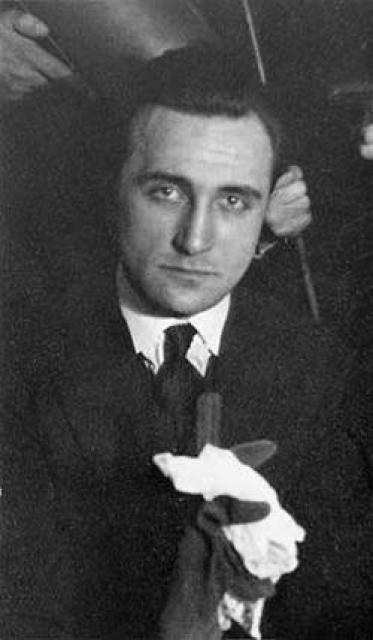
Jack Rigo
 France
- Jacques Rigo: The Founder of the Suicide Agency
- The Rise of Suicide Clubs and Hotels
- The Business of the General Suicide Agency
- The Life and Death of Jacques Rigo
- The Operations of the General Suicide Agency
- Life After the General Suicide Agency
- The Conclusion
Jacques Rigo: The Founder of the Suicide Agency
Bankruptcy, unhappy love, loss of hope for the future - there are many reasons that can drive a person to take their own life. It is not surprising, therefore, that throughout history, there have been firms in different countries that made a significant amount of money by assisting those wishing to end their lives. One such company was established in the heart of Paris in 1923 and facilitated "quick and certain departure from life using modern methods." This agency was called the General Suicide Agency and was founded by French writer and unsuccessful Jacques Rigo.
The Rise of Suicide Clubs and Hotels
Statistics show that suicide still ranks as the third leading cause of death, after illness and accidents. More than 400,000 people worldwide, including 60,000 Russians, 30,000 Americans, 25,000 Japanese, and 20,000 French individuals, take their own lives each year. However, there are also those who do not have the courage to pull the trigger or jump out of a window. This is why exotic businesses such as suicide clubs existed in many countries throughout history, from ancient times to the Middle Ages and the 20th century. Finding information about these clubs is extremely difficult, but the archives reveal that this business was thriving.
In Russia, these clubs were known as societies, while in Europe, they were called clubs or even hotels. These clubs-hotels offered comfortable accommodations for several days before the "thoughtful" entrepreneurs sent their clients to the other side. Tennis courts, swimming pools, golf courses, and restaurants - these clubs provided all the necessary facilities for their clients to enjoy life one last time. Broken by life's circumstances, bankrupt individuals, unhappy lovers, and terminally ill patients gathered in the luxurious salons of these clubs. Typically, they were once wealthy individuals who had lost everything due to financial collapse. The clubs charged a fee - equivalent to $300 in the early 20th century, which was the price of a cheap new car at the time. This fee covered the expenses associated with staying at the hotel, the procedure itself, funerals, and maintaining the graves in good condition.
The Business of the General Suicide Agency
For obvious reasons, this business was shrouded in secrecy. The only known holder of such a club was Jacques Rigo, who established the General Suicide Agency in Paris in the mid-20th century. Rigo chose to end his own life through the means he facilitated. The era in which he lived, the first half of the 20th century, lent itself to this business. Financial crashes, international instability, World War I, rebellions, and revolutions - all contributed to the popularity of suicide, which was discussed not only by decadent ladies over a cup of coffee but also by respectable business owners. The middle class of that time was deeply affected by the war of 1914-1918, which disrupted all plans and shattered lives. It was against this backdrop that Rigo's business, as well as that of other wealthy businessmen who managed to keep their involvement in the industry a secret, flourished.
The Life and Death of Jacques Rigo
Jacques Rigo was born in Paris in 1898. His father was a department head at the famous Bon Marche department store, and his mother worked there as an accountant. He grew up as a typical Parisian boy from an upper-middle-class French bourgeois family. In 1915, Rigo enrolled at the University of Paris to study law. There, he met a writer who introduced him to the literary scene. Among Rigo's friends were young, yet already renowned writers and artists such as Apollinaire, Louis Aragon, Philippe Soupault, André Breton, Pierre Reverdy, Pablo Picasso, Amedeo Modigliani, Salvador Dali, Wassily Kandinsky, and Filippo Marinetti.
Perhaps influenced by the atmosphere of this avant-garde and extravagant circle, the impressionable Jacques Rigo experienced a serious breakdown. He attempted suicide several times - once to end a relationship, another time out of depression due to his lack of success in various fields, and a third time out of existential anguish at a social gathering. It was during this last attempt that he came up with the idea for his business. The development of the plan to create a society for suicide was facilitated by Rigo's acquaintance with three fashionable young men - Jacques Vaché, Pierre Drieu La Rochelle, and René Crevel - who, like him, were financially struggling. At one of their parties, they decided to start a business, and in early 1923, Jacques Rigo, René Crevel, and Pierre Drieu La Rochelle established a company with the goal of assisting people in ending their lives at their own expense. Ironically, the agency was conceived as a tribute to Jacques Vaché, who had poisoned himself before it was established. The agency was aptly named the General Suicide Agency.
The Operations of the General Suicide Agency
The agency's statute stated that it was "a society recognized for its public benefit, with a capital of 50,000 francs. Its headquarters were located at 73 Boulevard Montparnasse, Paris" (with branches in Lyon, Bordeaux, Marseille, Monte Carlo, San Francisco, and Dublin). The services offered by the agency were described as follows: "Thanks to the latest devices, the General Suicide Agency is pleased to inform its clients that it will provide them with a reliable and immediate death, which will prevent those who have chosen suicide from missing their target." In addition to facilitating suicide, the club also arranged for a "proper burial, religious ceremony (optional), transportation of the body to the cemetery, express funerals, banquets, gatherings of friends and relatives, photography (or posthumous facial effigies), and souvenir distribution." The General Suicide Agency also took on the responsibility of fulfilling the last wishes of its clients. The club offered various methods of suicide at different rates, such as electrocution for 200 francs, poisoning for 100 francs, shooting for 100 francs, perfume-induced death for 500 francs, and hanging (for the less affluent) for 50 francs. The price list concluded with the statement: "For more information on express funerals, please request our Special Catalog. For inquiries, contact Mr. Jacques Rigo, Chief Administrator, 73 Boulevard Montparnasse, Paris (6th arrondissement). No responses will be given to those wishing to attend the suicide."
The General Suicide Agency operated for approximately five months. The number of clients, their identities, and the agency's profits remained a secret. It was not until 1970 that the "Posthumous Papers" of writer R. de Russi de Salya, written in 1934, were published, revealing details about Rigo's business.
Life After the General Suicide Agency
Rigo's business did not go as he had hoped because he remained more of a dandy than a businessman (which likely explains why any information about his business exists at all). He did not want to deal with the establishment of hotels for suicides in remote and beautiful locations (too much trouble), and without that, it was difficult to expand his business. Rigo desired easy money, and he often stated his dream: "Every Rolls-Royce I encounter extends my life by 15 minutes. Instead of paying tribute to funeral cars, people should bow to Rolls-Royces." In the spring of 1923, the agency was forced to close due to negligence by its employees, which led to problems with the police and criminals who attempted to take over the business. Rigo was persecuted by both groups, as well as by the relatives of those who had taken their own lives, who demanded money in exchange for their silence. In 1925, Rigo was forced to flee to America.
There, his unusual reputation quickly gained him a circle of acquaintances. He was accepted in high society salons and elegantly smoked cigars. In 1926, he married millionaire Gladys Beber, who presented him with a coveted Rolls-Royce as a wedding gift. The newspapers reported: "Rigo married one of the most beautiful women in America and one of the wealthiest, a widow with two children. He received his Rolls-Royce and his diamonds. The path to this achievement was far easier than he had anticipated." However, less than a year later, his beloved wife left him, leaving him penniless. Irony of fate, he became the typical client of the agency he had once created. Rigo returned to Paris and attempted to seek treatment for his heroin addiction, which he had developed in America. Unfortunately, he was unsuccessful. Without any hope for a bright future, Rigo shot himself in the forehead. This occurred on November 5, 1929.
His companions followed a similar fate. As mentioned earlier, Jacques Vaché was the first to pass away in 1919. He poisoned himself with a large dose of opium, "treating" two of his businessman friends who had come to visit him at a hotel with the same amount. René Crevel poisoned himself in 1935. He had planned his death in detail and described it in a private letter in 1924: "Teapot on the stove. Window tightly closed. I turn on the gas. I forget to strike a match. Reputation saved, time to read the farewell letter..." The last to go was Pierre Drieu La Rochelle. During the occupation years of World War II, Drieu collaborated with the occupying authorities, but his behavior was contradictory: he wrote anti-Semitic articles but saved his Jewish friends; he had close ties with the occupation regime but also protected many progressive-minded individuals from arrest. After the new regime issued an arrest warrant against him, Drieu took an overdose of barbiturates and left the gas on. This occurred on March 15, 1945.
The Conclusion
The final outcome of this story demonstrates that the creators of the General Suicide Agency were professionals in matters of death, and there is no reason to believe that their clients could have been dissatisfied.


