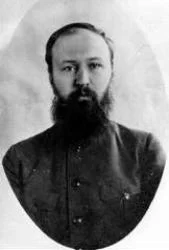
Jakob Rudolf Keyser
Jakob Rudolf Keyser helped establish history as a source-based academic discipline in Norway. A professor, editor of medieval texts and curator of antiquities, he devoted his career to recovering the country’s past. His scholarship also became part of nineteenth-century nation-building: some of his most influential ideas about the origins of Norwegians were later abandoned, even as his careful work with historical sources endured.
Education and Icelandic studies
Keyser was born in Christiania, now Oslo, on January 1, 1803, into a family and social circle shaped by public service. His father, Johan Michael Keyser, was a court chaplain who later became a bishop. After completing his university entrance examination in 1820, Keyser enrolled in theology, but his strongest interests lay in history, especially Norway’s national past.
In 1825 he received a scholarship to study in Iceland. During two years there, he learned both Old and modern Icelandic and deepened his knowledge of the language in which many medieval Norse sources were preserved. On returning to Christiania in 1827, he joined the university as a docent in history and statistics. His teaching included Old Norse, making him the first person in Norway to teach the language at university level.
Scholar and curator
Keyser became a lecturer in 1829 and a professor of history in 1837, holding the chair until his retirement in 1862. He also directed the university’s collection of antiquities, where he prepared its first catalogue and organized objects according to the Stone, Bronze and Iron Age system developed by Danish archaeologist Christian Jürgensen Thomsen. Opening the collection to students and visitors helped make it a resource for both research and public education.
His most substantial scholarly achievement was a three-volume edition of Norway’s medieval laws, Norges gamle Love indtil 1387, published from 1846 to 1849 with Peter Andreas Munch. To prepare it, the two scholars examined manuscripts in archives and libraries across Scandinavia, carefully recording differences between copies. Their editorial method and attention to documentary evidence set a high standard for the study of Norwegian medieval history.
Keyser also wrote on the medieval church and society. His Den norske Kirkes Historie under Katholicismen (The History of the Norwegian Church under Catholicism) appeared in two volumes in 1856 and 1858. His broader Norges Historie (History of Norway) was published posthumously between 1866 and 1870.
The Norwegian Historical School
Alongside Munch, Keyser became associated with the first generation of professional Norwegian historians, later called the Norwegian Historical School. The pair sought to describe Norway as a distinct historical and cultural community at a time when the country was strengthening its national identity after centuries of political union with Denmark.
Keyser’s best-known argument was the so-called immigration theory, set out in his 1839 essay on the origins and kinship of Norwegians. He proposed that Norwegians and people in northern Sweden had arrived from the north, while Danes and southern Swedes came from the south. The idea helped distinguish Norwegian history and language from Danish and Swedish traditions, but it rested on evidence too limited to support its claims. Later historians rejected it, especially as archaeological findings failed to substantiate the proposed migrations.
Legacy
Keyser’s reputation rests on this complicated combination: influential national interpretation and meticulous source work. While his migration theory belongs to an outdated stage in historical scholarship, his efforts to examine, compare and publish medieval manuscripts helped establish more rigorous methods for Norwegian history. His lectures were widely valued, and his work shaped the study of Old Norse texts and the country’s medieval past.
He remained unmarried and dedicated much of his life to academic work. After retiring in 1862, he died in Christiania on October 9, 1864. His research and teaching helped lay foundations for the professional study of Norwegian history, a legacy that survived the theories that had once made his name controversial.