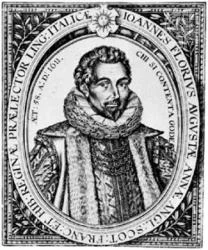
Jakub Zebrowski
Jakub Żebrowski belongs to the generation of Polish writers who helped bring the great works of classical antiquity into the language of their own readers. His surviving reputation rests on one ambitious undertaking: a Polish verse translation of Ovid’s Metamorphoses, the sweeping Roman poem of myth, desire, violence, and transformation. Almost everything else about his life remains elusive, making the work itself the clearest window onto his literary world.
A Life Largely Unrecorded
The details of Żebrowski’s birth, family, education, and death are not known from the surviving biographical record. An 1821 edition of his translation acknowledged that information about the poet’s life had not been found. It also suggested that his connection to the Zamoyski family might reward further archival research, but that possibility does not establish a particular position or personal relationship. His known work places him in the literary culture of the Polish–Lithuanian Commonwealth in the first half of the seventeenth century, when translating classical authors was an important way of enriching Polish letters.
The Ovid Translation
Żebrowski’s lasting achievement was his rendering of all fifteen books of Ovid’s Metamorphoses into Polish verse. He called the work Przeobrażenia, or “Transformations.” The poem offered an immense challenge: Ovid’s stories move rapidly from one myth and character to another, while exploring how bodies and identities change under the pressure of love, power, anger, and divine intervention.
The first edition appeared in Kraków in 1636. Żebrowski dedicated the translation to Tomasz Zamoyski, the Crown Chancellor and son of the statesman Jan Zamoyski. In the dedication, he asked Zamoyski to serve as a protector of the work and expressed his readiness to serve him. The gesture reflects the patronage networks on which many writers of the period depended, though the dedication alone does not tell us how close the two men were or what support Żebrowski received.
A Distinctive Literary Voice
Later assessments singled out the translation’s forceful and compact language. One nineteenth-century editor praised Żebrowski’s ability to convey Ovid’s thought and noted the apt, bold, and energetic quality of many expressions. The same assessment found that the translator’s devotion to brevity could sometimes make passages difficult to follow, and that the Polish version did not always capture the Roman poet’s grace and ease.
That mixed judgment helps explain the work’s place in literary history. Żebrowski did not simply transfer a famous Latin poem word for word; he recast its stories in the rhythms and resources of early modern Polish. His version was compared favorably with another Polish translation by Walerian Otwinowski, published in 1638. Such comparisons helped keep the poem in view as readers and scholars considered how the classical canon could sound in Polish.
Afterlife and Legacy
The translation was brought back into print in an 1821 edition, which presented it to a later generation as an important monument of older Polish literature. Its editor treated early translations as records of the language’s history as well as literary works in their own right: their vocabulary, syntax, and turns of phrase preserved features of Polish at an earlier stage of its development.
Żebrowski remains a shadowy figure, known chiefly through this single surviving work. Yet the scale of his choice was striking. By taking on Ovid’s fifteen-book poem, he helped make an expansive body of classical myth available in Polish verse and left a vivid, if incomplete, record of the language and literary ambitions of his age.