James MacDonald
 Great Britain
- Biography of James MacDonald
- Entry into Politics
- Marriage and Political Career
- Prime Minister and Later Years
- Legacy and Publications
Biography of James MacDonald
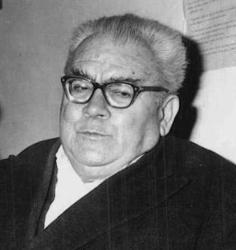
James MacDonald was an English statesman and political figure who was born on October 12, 1866 in Lossiemouth, Scotland. He began his career as a teacher's assistant and later worked as a clerk after moving to London in 1884. While working, MacDonald continued his education by attending evening courses.
Entry into Politics
MacDonald became involved in journalism and in 1894 joined the Independent Labour Party. He soon realized the need for a separate Labour Party supported by trade unions. In 1900, he became the first secretary of the Labour Representation Committee, which was formed by trade unions to organize their electoral campaign. In 1905, the committee was renamed the Labour Party and officially adopted that name in 1906.
Marriage and Political Career
In 1896, MacDonald married Maria Gladstone, a distant relative of the British Prime Minister, W.E. Gladstone. This marriage provided MacDonald with financial independence and introduced him to the respectable circles of English society. In 1906, MacDonald was elected to Parliament as a Labour Party member. He became the chairman of the Labour Party the same year, and in 1911, he became the leader of the Labour Party in the House of Commons.
Prime Minister and Later Years
In 1914, MacDonald opposed Britain's entry into World War I, but did not receive support from his party. Despite losing the 1918 general election, he maintained his authority within the party. When the Labour Party became the second-largest party in the House of Commons in 1922, MacDonald was elected as its leader. From January to November 1924, he served as the first Labour Prime Minister of Great Britain and also held the position of Foreign Secretary.
After resigning due to the Campbell Case, the Conservatives won the 1924 election. However, in 1929, the Labour Party gained a majority of seats, and MacDonald once again became Prime Minister. During his tenure, MacDonald was unable to repeal the 1927 law banning strikes and implement a 7-hour workday for miners. Some progress was made in housing construction for workers, expanding the range of people receiving benefits, and increasing the amount of benefits.
In international relations, MacDonald pursued a policy of maintaining peace. He played a significant role in the London Naval Conference of 1930, where an agreement was reached on the limitation and reduction of naval armaments. In 1931, due to severe financial difficulties faced by the Labour government, MacDonald and several other Labour leaders left the party and formed a National Government with the Conservatives and some Liberals. MacDonald remained Prime Minister until 1935.
Legacy and Publications
James MacDonald passed away on November 9, 1937 while traveling to South America. Throughout his career, he authored several notable works, including "Socialism and Society" (1905), "Socialism" (1907), "Socialism and Government" (1909), "The Awakening of India" (1911), "The Socialist Movement" (1911), "Syndicalism" (1912), "Parliament and Revolution" (1919), "The Government of India" (1919), and "Socialism, Critical and Constructive" (1921).