James Mackenzie
 Great Britain
- Biography of James Mackenzie
- Contributions to Medical Research
- Personal Life and Achievements
- Later Years and Legacy
Biography of James Mackenzie
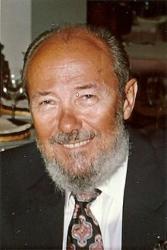
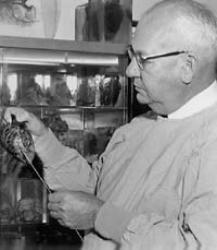
James Mackenzie was a Scottish physician and cardiologist, renowned for his pioneering research on heart arrhythmias. He was born in Scone, Scotland, into a farming family. In 1882, James obtained a Master's degree from the University of Edinburgh. For over a quarter of a century, he practiced medicine in Burnley, Lancashire, England.
Contributions to Medical Research
James Mackenzie conducted extensive research throughout his career and made several original discoveries, publishing numerous articles. He made significant contributions to the field of cardiology, including the use of Riva-Rocci's sphygmograph to obtain pulse graphs. Later, he utilized a device called the "polygraph" to record arterial and venous pulses, allowing him to evaluate the patient's heart condition and measure the atrioventricular interval. In 1890, Mackenzie discovered ventricular extrasystole, and he also drew attention to the heart's ability to work, laying the foundation for the study of cardiac muscle energy.
Personal Life and Achievements
In 1887, James married Frances Jackson, and the couple spent their honeymoon in Italy. They had two daughters, Dorothy, born in 1888, and Jean, born in 1893. In November 1907, Mackenzie relocated from Burnley to London, where he quickly gained recognition throughout the capital. Through his research, he distinguished between harmless and potentially dangerous rhythm disturbances. He also proved the effectiveness of digitalis in treating arrhythmia.
Later Years and Legacy
In 1915, James Mackenzie became a member of the Royal Society and was knighted. Three years later, he established the Institute of Clinical Research in St Andrews, which focused on meticulous recording and analysis of patients' diseases. Two early models of the polygraph and a bronze bust of Mackenzie are still preserved in the Tayside Medical History Museum. Sadly, Mackenzie suffered from angina for many years and passed away in January 1925 in London. As per his wishes, his heart was donated to the anatomical department of St Andrews University.