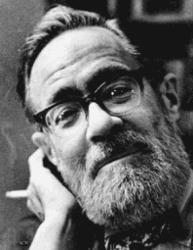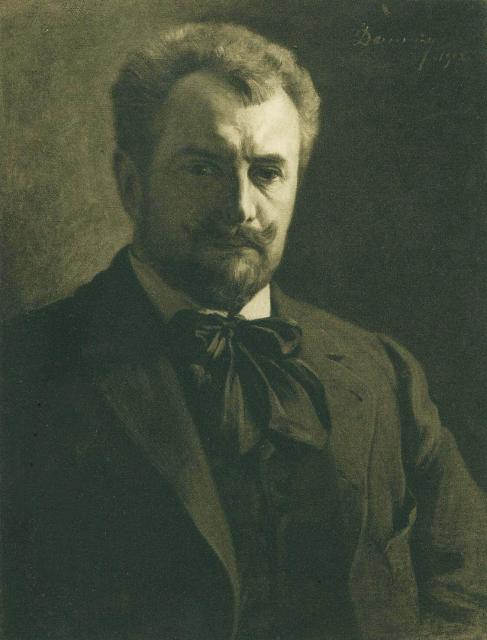
Jan Kasprowicz
 Poland
- Early Life and Education
- Political Activism and Imprisonment
- Academic Career
- Literary Career
- Modernist Turn
- Religious and Mystical Themes
- Translation and Linguistic Prowess
Early Life and Education
Jan Kasprowicz was born into poverty in 1860. Despite his father's illiteracy, Kasprowicz pursued an education at German grammar schools. He later enrolled at Leipzig University, where he studied philosophy, and then transferred to the University of Wrocław.
Political Activism and Imprisonment
Kasprowicz's involvement in socialist movements led to his arrests in 1887. After his release, he settled in Lwów, where he wrote articles on politics and literature for "Kurier Lwowski."
Academic Career
In 1904, Kasprowicz received a doctorate from the University of Lwów. He became a professor of comparative literature there in 1909 and served as rector from 1921 to 1922.
Literary Career
Early RealismKasprowicz's early works, such as "Poetry" (1889) and "From the Peasant's Field" (1891), depicted the harsh realities of peasant life. His drama "The End of the World" (1891) reflected similar themes.
Modernist Turn
In the 1890s, Kasprowicz shifted towards modernism and symbolism. He penned poems imbued with a sense of doom, such as those in "To the Perishing World" and "Salve Regina."
Religious and Mystical Themes
Kasprowicz's later works explored religious and mystical elements. Collections like "Book of the Poor" (1916) and "My World" (1926) reflected his spiritual search.
Translation and Linguistic Prowess
Kasprowicz was fluent in Latin, ancient Greek, French, English, and other languages. He translated masterpieces from around the world, including works by Shakespeare, Euripides, Schiller, and Ibsen.