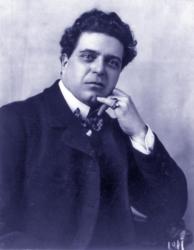
Jan Ladislav Dussek
 Czech
Czech- Jan Ladislav Dussek: A Pioneering Composer and Pianist
- Early Life and Education
- Pianistic Virtuosity
- Musical Innovation
- Piano Compositions
- Cataloguing and Legacy
Jan Ladislav Dussek: A Pioneering Composer and Pianist
Jan Ladislav Dussek (1760-1812) was a Czech composer and pianist who played a significant role in the transition from Classicism to Romanticism.
Early Life and Education
Dussek was born in Čáslav, Czech Republic, on February 12, 1760. His father, Jan Josef Dussek, was an organist and composer, and his mother, Veronika Dušková, was a harpist. Dussek began his musical studies at a young age, learning piano from his father at age five and organ at age nine. He also sang in the church choir.
Dussek's early education included stints at Jesuit gymnasiums in Jihlava and Kutná Hora, where he studied choir under Ladislav Špinar and served as an organist. In 1776, he moved to Prague, attending the city's New Grammar School and the University of Prague for only one semester.
Pianistic Virtuosity
Dussek rose to prominence as one of the first virtuoso pianists. He toured extensively throughout Europe, performing in concert halls from London to St. Petersburg and Milan, gaining renown for his exceptional technical proficiency. His extended stay in London (1792-1800) played a crucial role in the development of the expanded fortepiano, and he was the recipient of one of John Broadwood's first 6-foot pianos.
While Dussek's playing style and compositions did not have a lasting impact on mainstream musical practices, his influence on Franz Liszt and other later pianists has been suggested.
Musical Innovation
Dussek's compositions often departed from the dominant Classical style of his contemporaries. He embraced chromaticism, expressive melodies, and innovative harmonies. His works anticipated Romantic composers such as Chopin, Schumann, and Mendelssohn, but his stylistic influence on them remained limited due to the relative obscurity of his music outside England.
Dussek's most notable compositions include piano sonatas, concertos, chamber music (including the "Piano Trio, Horn, and Violin" and the "Battle of Trafalgar" for piano, violin, cello, and percussion), and an opera ("The Captive of Spielberg").
Piano Compositions
Dussek's piano works form the core of his output. He wrote 35 piano sonatas, 11 piano duets, and numerous other pieces. His chamber music includes 65 violin sonatas and 24 piano trios, many of which feature the harp.
Cataloguing and Legacy
Cataloguing Dussek's works has been challenging due to numerous publishers and the assignment of multiple opus numbers to some pieces. A thematic catalogue published by Artaria in 1812 is incomplete, while a more comprehensive catalogue compiled in 1964 numbers the works chronologically and assigns them "C"/"Craw" prefixes; doubtful works have "Craw D" prefixes.
Dussek's contributions to the art of piano playing are reflected in his published writings on keyboard technique. His music, while largely forgotten today, provides valuable insights into the transition from Classicism to Romanticism and the evolution of the piano as a concert instrument.