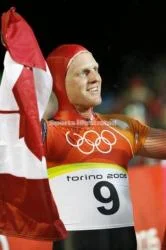
Janine Flock
Janine Flock (born July 25, 1989) is an Austrian skeleton racer and Olympic champion. She won women’s skeleton gold at the 2026 Winter Olympics in Cortina d’Ampezzo, becoming Austria’s first Olympic champion in the event. Over a long international career, she has also won three overall World Cup titles, four European championships and multiple world championship medals.
Early life and entry into skeleton
Flock was born in Hall in Tirol, Austria. She began skeleton at about 14 after a school sports teacher suggested she try the discipline. Skeleton athletes race headfirst down an ice track on a small sled, steering through shifts in body position and weight. Flock advanced quickly and won the women’s skeleton event at the 2012 Winter Youth Olympics.
World Cup and championship career
Flock emerged among the leading athletes on the international circuit in the 2010s. She won her first overall IBSF World Cup title in 2014–15 and went on to claim two more season titles. Her results also included silver medals in women’s skeleton and the mixed team event at the 2016 World Championships, plus an individual bronze at the 2020 championships.
In European competition, Flock became a four-time champion, winning the individual title in 2014, 2016, 2019 and 2025. The consistency of her racing kept her among the sport’s top competitors across multiple seasons, even as younger athletes entered the field.
Olympic career
Flock made her Olympic debut at Sochi 2014, finishing ninth. At PyeongChang 2018 she was in contention for a medal and led after three runs, but finished fourth, just two hundredths of a second short of the podium. She placed tenth at Beijing 2022.
At the 2026 Games in Cortina, Flock delivered four highly consistent runs to take the Olympic title. At 36, she became the oldest medalist in women’s Olympic skeleton and won Austria’s first medal in the women’s event. The victory capped a long pursuit after her near-miss in 2018.
Legacy
Flock’s career is marked by longevity and resilience. Her Olympic gold came after three earlier Games, multiple World Cup seasons at the top level and years of success at European and world championships. She helped establish Austria as a major force in women’s skeleton and reached the sport’s highest honor after more than two decades of international competition.