Janne Korsunskay
 Israel
- Biography of Zhanna Korsunskaya
- Reasons for Writing
- Autobiographical Elements in "The Queen on the Left Hip"
- Publication in Hebrew
- Writing as a Profession in Israel
- Political Career
- Attitude in the Knesset
- Nostalgia for Russia
- Learning Hebrew
- Russian Language and Her Son
Biography of Zhanna Korsunskaya
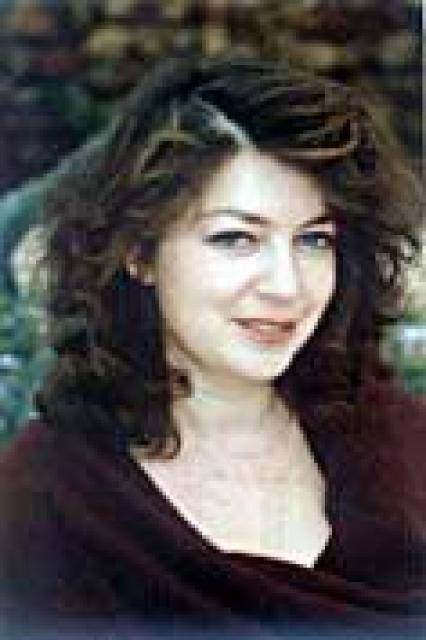
Life in IsraelZhanna Korsunskaya, a novelist, found herself in a situation where she was trying to maintain her human dignity, loyalty to the ideals of her youth, and at the same time, make a life for herself in this complex world. All of this, along with her decision to step away from her creative work in television, led her to start writing. Writing on paper is different from making a film, there is no need to seek sponsors. All you need is a pen and paper. Korsunskaya's novels and stories are written in Russian, and some of them have been translated and published in Hebrew in Israel. This year, her book "The Queen on the Left Hip" was also released in Russia. Ten years ago, Korsunskaya repatriated to Israel with her parents, brother, and eight-year-old son. Life had to be started from scratch. She worked for several years in Israeli television and is currently a parliamentary advisor to a Knesset member and a press attaché to the Commission for Aliya and Absorption. Recently, she visited Russia for the first time in ten years.
Reasons for Writing
Korsunskaya began writing while trying to navigate the difficulties of preserving her human dignity and ideals while settling into a new and challenging life. She realized that she had to leave television and find something that would support her family. Writing provided her with a means of self-expression that did not require seeking sponsors or making films. She found solace in the process of writing, which she considers a form of healing.
Autobiographical Elements in "The Queen on the Left Hip"
"The Queen on the Left Hip" is written in the first person. While Korsunskaya's personal experiences serve as inspiration, the book is not strictly autobiographical. The character of the protagonist is based on her grandmother, Rachel. Korsunskaya writes not only for the reader but also for herself, as the process of writing is a form of therapy for her.
Publication in Hebrew
Korsunskaya's book was translated into Hebrew and published unexpectedly. While looking for work in television, she met Shai Markovich, a journalist and filmmaker who had been living in Israel for eight years but spoke Russian fluently. Korsunskaya shared her stories with him, and he was so impressed that he decided to translate one of them, "The Inflatable Heart," into Hebrew. Eventually, one of the largest publishers in Israel, "Last News," approached her to publish the book. Despite some reservations about Markovich's translation, it won an anonymous competition for the best translation. The language in the book remained as easily readable as in the original Russian version.
Writing as a Profession in Israel
Korsunskaya acknowledges that it is difficult to make a living solely from writing in Israel. Only a few famous authors can support themselves through their writing, and most writers have other professions as well.
Political Career
Korsunskaya currently works in the Knesset, the Israeli parliament. She finds it fascinating to witness the decision-making processes at the government level and to observe how new laws and budgets are formed. She started working in the Commission for Aliya and Absorption, which deals with issues related to immigration and integration, as she felt a close connection to these topics after living in Israel for seven years. She believes in humanizing the letters received from new immigrants, translating them into Hebrew in an emotionally charged manner, so that the Knesset employees can understand the personal stories behind the letters.
Attitude in the Knesset
After the publication of her book, Korsunskaya's colleagues in the Knesset started referring to her as a writer. However, she believes that different qualities are required for her work in the Knesset, such as understanding the internal workings of the parliament and the Russian-speaking community.
Nostalgia for Russia
Korsunskaya did not have time to feel nostalgic when she first arrived in Israel. She had to learn Hebrew, work, raise her son, and help her parents. Before leaving Russia, she had made it clear to everyone that if they wanted to find her, they would find her in Jerusalem. Repatriation requires a clear decision on where one wants to live and an understanding that it is a permanent move. However, after ten years, she had the opportunity to visit Russia and found it to be a transformative experience. She discovered the intellectual atmosphere and found it refreshing to have conversations in Russian, as in Israel, she mostly communicates in Hebrew. She believes that there is a lack of information about Israel in Russia, which is why her lectures on the Promised Land were well-received. The trip provided her with the energy she needed for life and creativity.
Learning Hebrew
When Korsunskaya arrived in Israel, she did not know a word of Hebrew. Despite not having a knack for languages, she sought alternative ways to learn. She discovered that many people who listened to the radio suddenly started speaking Hebrew. She stopped reading Russian books and newspapers and listened to Hebrew radio for three years straight. She was able to have basic conversations after about three to four years. However, there was still a mental pressure when speaking and listening to Hebrew for extended periods, which she overcame after five years. Now she can confidently converse on any topic, read, and write in Hebrew.
Russian Language and Her Son
Korsunskaya's son, Anton, is almost eighteen years old. He is finishing school and will join the army, as is customary for Israeli young men. She is glad that he is fluent in Russian. Initially, she wanted to speak to him in Hebrew, but he insisted on speaking Russian at home. She believes that in Israel, there is a general trend among immigrants to preserve their language and culture. Luckily, this is encouraged in their country.