Jannine McHaffie
 Great Britain
Jannine McHaffie’s public story began with persistent nosebleeds and a diagnosis that took months to arrive. In 2015, the young mother from Chelmsford, Essex, described how a rare cancer led to extensive surgery and facial reconstruction—and how her three-year-old daughter gave her a reason to face treatment.

Diagnosis and Surgery
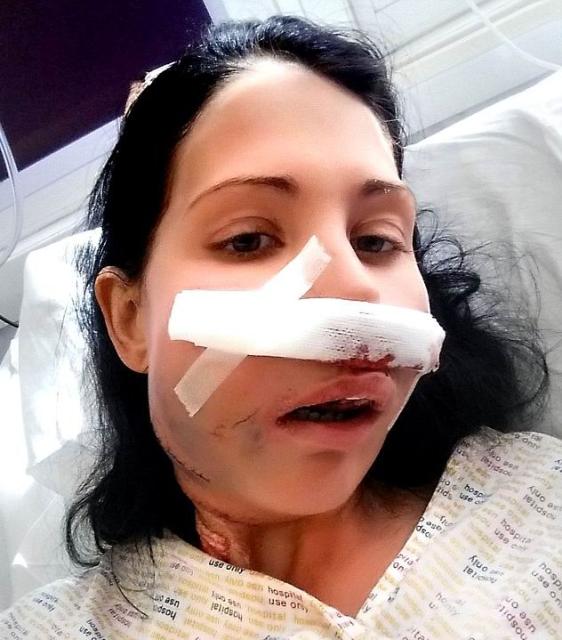
McHaffie said her nosebleeds were initially attributed to hay fever. When a lump inside her nose began to interfere with her breathing, it was thought to be a benign polyp. Further imaging and a biopsy eventually identified adenoid cystic carcinoma, a rare cancer associated with salivary gland tissue. At the time, she was 25.

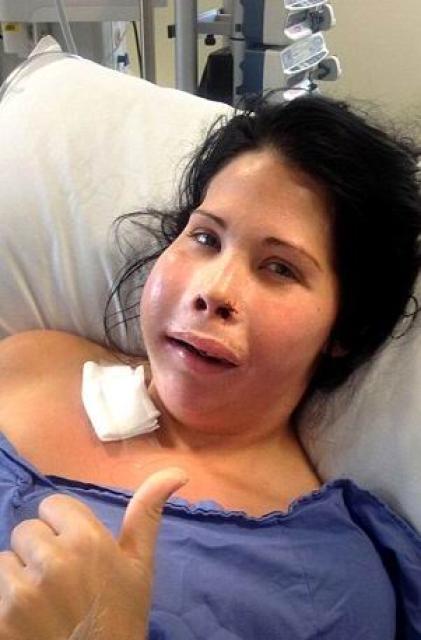
To remove the tumour, surgeons at the Royal Marsden Hospital performed a 13-hour operation on May 26, 2015. They removed her palate, upper teeth, part of her upper jaw and cheekbone. Surgeons then used bone from her right leg to rebuild part of her face. The complex procedure was followed by two further operations after doctors noticed problems with blood flow in the reconstructed area. The surgeries were reported as successful.
A Mother’s Resolve
In interviews after the operation, McHaffie spoke about the fear of hearing that so much of her upper mouth and face would need to be removed. She said she focused on her young daughter and wanted doctors to do everything they could to keep her alive and present as the child grew up. She also credited her parents and partner with supporting her through the ordeal.
At the time of the reports, McHaffie was recovering at home and expected further radiotherapy once healing was complete. She described the recovery as long and said she hoped eventually to have dental veneers as part of restoring her appearance. Her account emphasized the slow work ahead as much as the dramatic operation itself: recovery, additional treatment and adapting after major reconstructive surgery.
Public Story
News coverage often compressed McHaffie’s experience into a striking headline about having “half her face” removed. Her own comments focused on the practical and emotional reality: the impact on breathing and eating, the recovery process, and her determination to raise her daughter. The story brought attention to an uncommon cancer and to the role of reconstructive surgery in helping patients continue their lives after extensive treatment.
McHaffie’s experience became known through interviews rather than a public career. Her account remains a portrait of a young parent confronting a life-changing diagnosis and choosing to speak about the treatment in direct, personal terms.