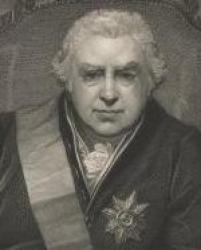
Jean-Baptiste Lamarck
 France
- Jean-Baptiste Lamarck: Pioneer of Evolutionary Theory
- Transition to Science and Botany
- Member of the French Academy and Museum of Natural History
- Contributions to Zoology
- The Theory of Lamarck
- Legacy and Impact
- Later Life and Honors
- Additional Contributions
Jean-Baptiste Lamarck: Pioneer of Evolutionary Theory
Jean-Baptiste Pierre Antoine de Monet, Chevalier de Lamarck, was born on August 1, 1744, in Bazantin, France. His aristocratic family intended for him a priestly career, but at age 16, Lamarck left the Jesuit college and enlisted in the military. He served with distinction, rising to the rank of officer.
Transition to Science and Botany
At 24, Lamarck resigned his commission and moved to Paris to study medicine. During his studies, he became captivated by natural history, particularly botany. His talent and dedication were evident, and in 1778, he published his three-volume "Flore française." In its third edition, Lamarck introduced an analytical classification system for plants. This system remains a key botanical tool to this day.
Member of the French Academy and Museum of Natural History
Lamarck's botanical expertise earned him recognition and a membership in the prestigious Paris Academy of Sciences. When the French Revolution erupted in 1789, Lamarck embraced its principles. The subsequent upheaval led to the reorganization of the Royal Botanical Garden, where Lamarck became Professor of Zoology of Insects, Worms, and Microscopic Animals in 1793.
Contributions to Zoology
Despite his age, Lamarck excelled in his new field. He coined the term "invertebrate" in 1796 and published his monumental seven-volume "Histoire naturelle des animaux sans vertèbres" (1815-1822). This work expanded Linnaeus's two classes of invertebrates to 10, laying the groundwork for modern invertebrate classification. Lamarck also introduced the term "biology" in 1802, independently of the German scientist Treviranus.
The Theory of Lamarck
Lamarck's most significant contribution was his evolutionary theory, published in his 1809 work "Philosophie zoologique." He proposed that organisms could inherit characteristics acquired during their lifetime. These traits, influenced by environmental pressures and habits, could accumulate over generations, leading to the gradual evolution of species.
Legacy and Impact
Lamarck's theory initially met with skepticism but later influenced Charles Darwin's work on natural selection. Lamarckian ideas continue to inform evolutionary discussions, particularly in the concept of "progressive adaptation" that sees organisms inherently striving for complexity.
Later Life and Honors
By 1820, Lamarck had become completely blind but continued to dictate his works to his daughters. Despite his poverty and anonymity at the time of his death on December 18, 1829, Lamarck's legacy was eventually recognized. A monument honoring him was unveiled in Paris in 1909.
Additional Contributions
Besides his botanical and zoological contributions, Lamarck also authored works on geology, meteorology, and hydrology. In his "Hydrogéologie" (1802), he proposed the principle of historical and actualistic geology.