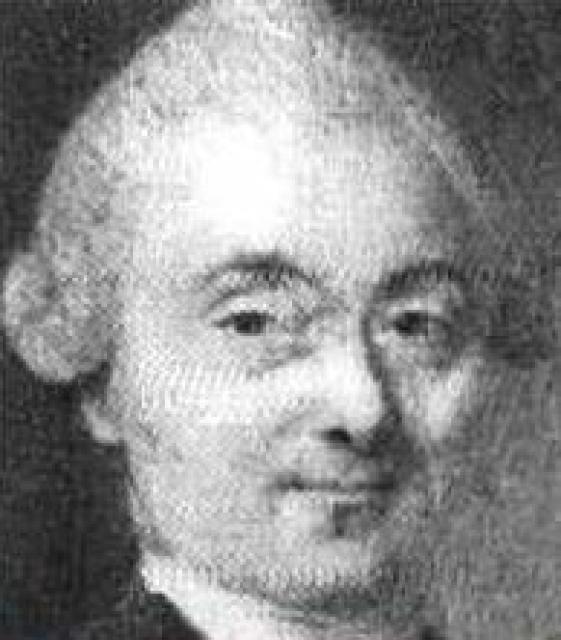
Jean-Baptiste Wendling
 Germany
- Jean-Baptiste Wendling: German Flautist and Composer
- Royal Patronage and Recognition
- Friendship with Mozart
- Support for Mozart's Career
- Bavarian Court and Royal Connections
- Composition and Advocacy
- Legacy and Influence
Jean-Baptiste Wendling: German Flautist and Composer
Early Life and CareerBorn in Rappoltsweiler, Alsace, the German flautist and composer Jean-Baptiste Wendling began his musical journey at the Zweibrücken court from 1747 to 1750. He not only played the flute but also taught music to Duke Christian IV himself. His exceptional talent led to a generous salary, almost double that of his contemporaries.
Royal Patronage and Recognition
In 1749, Wendling's reputation soared when he performed in Berlin. His performance impressed King Frederick II the Great of Prussia so much that he gifted him a golden snuffbox. This royal patronage set the stage for Wendling's ongoing success.
Friendship with Mozart
1751 marked a pivotal moment when Wendling became a court flautist in Mannheim. It was there that he encountered the young Wolfgang Amadeus Mozart. Their friendship blossomed, and Mozart's affection for Wendling is believed to have inspired him to compose for the flute.
Support for Mozart's Career
Wendling played a crucial role in supporting Mozart's career. In 1778, he secured a commission from Ferdinand Dejean for a series of flute concertos and quartets. Mozart's response was a masterpiece, with many believing that the flute parts were tailored specifically for Wendling. Additionally, Wendling's wife, Dorothea, performed in one of Mozart's operas.
Bavarian Court and Royal Connections
Wendling's fame continued to grow, and in 1778, he moved to Munich to join the Bavarian court orchestra. He maintained his connection with Frederick II, who considered him as a potential successor to his flute teacher, Johann Joachim Quantz.
Composition and Advocacy
Beyond his virtuosic flute playing, Wendling was also a skilled composer. His surviving sonatas primarily featured the flute as the central instrument. Notably, he remained skeptical of adding more keys to the flute, preferring the traditional six-key design. He discouraged his students from using the emerging eight-key flutes.
Legacy and Influence
Jean-Baptiste Wendling's legacy as a flautist and composer continues to inspire musicians. His exceptional talent and dedication not only enriched the musical landscape of his era but also influenced the trajectory of Wolfgang Amadeus Mozart's career.


