Franz Xaver Scharwenka
 Germany
- Franz Xaver Scharwenka: German Composer, Pianist, and Educator
- Concert Career and Renowned Pianism
- Conducting and Composition: Piano Dominance
- Opera, Symphony, and Chamber Works
- Conservatory and Teaching Legacy
- Publications and Autobiography
- Revival of Interest
Franz Xaver Scharwenka: German Composer, Pianist, and Educator
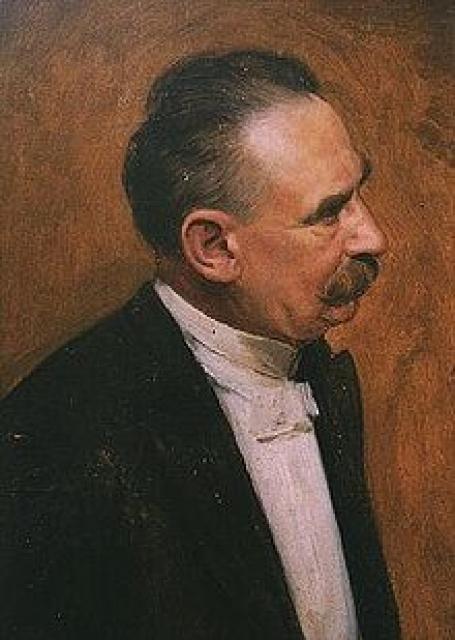
Born into a family of architects in Samter, Germany, Franz Xaver Scharwenka showed an early aptitude for music. Despite his interest, he did not receive formal musical training until the age of 15, when he enrolled at the New Academy of Music in Berlin under the tutelage of Theodor Kullak (piano) and Richard Wuerst (composition).
Concert Career and Renowned Pianism
After graduating, Scharwenka began teaching at the Kullak Academy in 1868 and made his concert debut as a pianist the following year. Throughout his career, he toured extensively throughout Germany and the rest of Europe, renowned for his exceptional interpretations of Chopin's works. His several recordings—including Chopin's Waltz in A-flat minor, Op. 42, and Fantasy in F minor, Op. 49—are considered notable contributions to the early music recording era.
Conducting and Composition: Piano Dominance
As a conductor, Scharwenka began actively performing in the mid-1880s, focusing primarily on works by Beethoven, Liszt, and Berlioz. His compositions, from his Op. 1 Piano Trio No. 1 (1868) onward, consistently featured the piano as the solo instrument. Among his most significant works are his four piano concertos, particularly his Piano Concerto No. 1 (Op. 32), dedicated to Liszt, and his Piano Concerto No. 4 (Op. 82), premiered in New York under the baton of Gustav Mahler.
Opera, Symphony, and Chamber Works
Scharwenka also composed the Symphony in C minor, Op. 60 (1885), and the opera "Mataswintha" (1894). His numerous solo piano pieces, chamber music, and other works further demonstrate his mastery and versatility as a composer. His Polonaise in E-flat minor, Op. 3, No. 1, remains one of his most popular compositions.
Conservatory and Teaching Legacy
Scharwenka founded his own conservatory in Berlin in 1881. After moving to New York in 1891, he established another conservatory there, leaving his Berlin institution to be merged with Carl Klindworth's conservatory in 1893. His brother, Philipp Scharwenka, assumed nominal leadership. Upon returning to Germany in 1898, Franz Xaver Scharwenka effectively resumed control of his Berlin conservatory. Notable pupils include José Vianna da Motta, Edward Fazer, Telemachus Lambertine, Oscar Fried, and Otto Klemperer.
Publications and Autobiography
Scharwenka published "Methodik des Klavierspiels" (1907), a treatise on piano playing, and his autobiography, "Klänge aus meinem Leben" (1922), translated into English as "Sounds from My Life" (2007).
Revival of Interest
Interest in Scharwenka's music experienced a renaissance in the 1960s with Earl Wild's recording of his Piano Concerto No. 1. In the 1990s, a full-scale revival was spearheaded by Marc-André Hamelin, Stephen Hough, Michael Ponti, and, most notably, Seth Tanner.