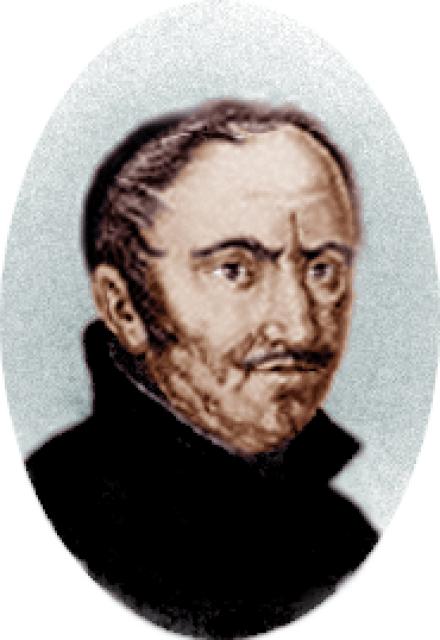
Jean Hardouin
 France
- Jean Hardouin: A French Jesuit Scholar
- Royal Librarian and Scholarly Pursuits
- Expertise in Diverse Fields
- Controversial Historical Research
- Legacy in Modern History
Jean Hardouin: A French Jesuit Scholar
Early Life and EducationJean Hardouin, a French Jesuit scholar, was born in Quimper, Brittany. From his father's bookstore, he developed a passion for literature and received his early education. At age 20, he joined the Society of Jesus.
Royal Librarian and Scholarly Pursuits
In 1683, Hardouin became the head of the French Royal Library (Collège Louis le Grand). His contemporaries were astounded by his vast knowledge and exceptional work ethic, as he devoted himself to scholarly research from 4 am until late at night.
Expertise in Diverse Fields
Hardouin was widely recognized as an authority in theology, archaeology, ancient languages, numismatics, chronology, and philosophy of history. In 1684, he published the speeches of Themistocles and works on Horace and ancient numismatics. His influential 1695 treatise on Jesus' last days argued that the Last Supper took place on Thursday, not Friday.
Controversial Historical Research
In 1687, the French Assembly of the Clergy tasked Hardouin with the monumental task of collecting and editing all Church Councils (Conciliorum collectio regia maxima), aiming to align them with contemporary doctrines. Commissioned by Louis XIV, the work took 28 years to complete.
Hardouin's critical approach to ancient writings drew fierce criticism from his peers. He questioned the authenticity of many classical works, claiming that they were forged by monks in the 13th century. He also argued that the original text of the New Testament was written in Latin.
Legacy in Modern History
Despite the controversies surrounding his work, Hardouin's meticulous scholarship and systematic approach laid the foundation for modern historical research. His magnum opus, along with his numerous commentaries and editions of ancient texts, continues to be referenced and debated.




