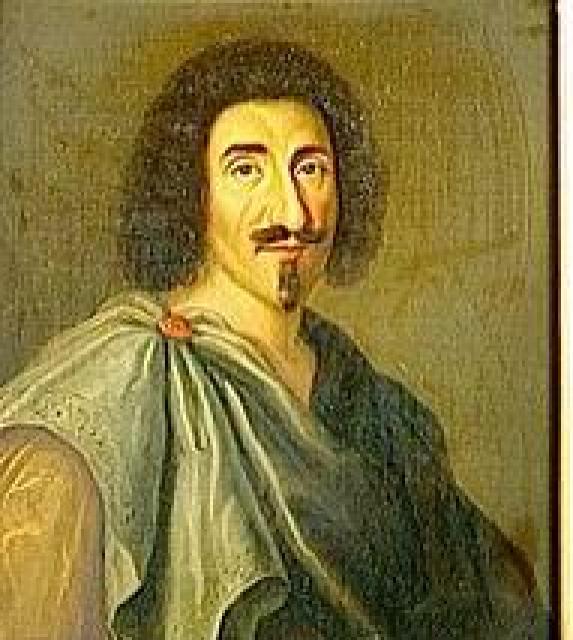
Jean-Louis Guez de Balzac
 France
- Early Life and Education
- Journey to Italy and the Birth of "Lettres"
- Return to Paris and Recognition
- Founding Member of the French Academy
- Impact of "Lettres" on French Literature
- Other Writings
- Influence on French Prose
Early Life and Education
Guez de Balzac, a renowned French epistolarian, was born to a noble mayor in Angoulême. He studied at a Jesuit college and then at Leiden University, where he encountered the philosopher Théophile de Viau.
Journey to Italy and the Birth of "Lettres"
In 1621, Balzac traveled to Rome as secretary to Cardinal La Valette. It was in Italy that he began working on his most famous work, "Lettres" ("Letters").
Return to Paris and Recognition
Upon his return to Paris in 1623, Balzac gained widespread recognition. He enjoyed the patronage of Cardinal Richelieu, who appointed him royal councillor of state and historiographer of France. Balzac frequented the literary circles of Madame de Rambouillet's salon.
Founding Member of the French Academy
In 1634, Balzac became one of the first elected members of the Académie française. His chair was number 28.
Impact of "Lettres" on French Literature
Balzac's "Lettres," published in parts in 1624 and posthumously, had a profound impact on French literature. Their influence on national prose is comparable to that of Malherbe on poetry. "Lettres" gained international fame and earned Balzac numerous correspondents, including Chapelain and Conrart.
Other Writings
In addition to "Lettres," Balzac authored several didactic works: "Le prince" (1631), a eulogy to Louis XIII; "Le Socrate chrétien" (1652), a theological treatise; and "Aristippe ou De la Cour" (published posthumously in 1658), a political treatise. His памфлет "Le Barbon" (1648) criticized pedants, yet ironically, Balzac was portrayed as a pedant in Charles Sorel's "The True History of Francion."
Influence on French Prose
Balzac's treatises, especially his letters, influenced the development of French classical prose. His elegant style and thoughtful insights shaped the literary landscape of the era.



