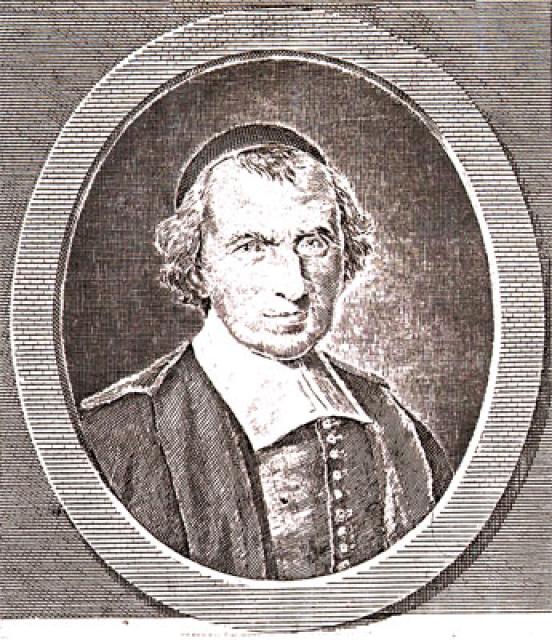
Jean Meslier
 France
- Early Life and Religious Career
- Confrontation with Oppression
- Meslier's "Testament"
- Content of the "Testament"
- Meslier's Social Ideal
- Legacy and Impact
Early Life and Religious Career
Jean Meslier was born into a family of weavers in France. Despite his parents' wishes, he became a Catholic priest in 1689. For the next 40 years, he served as a priest in Champagne without complaint. Unbeknownst to his flock, Meslier harbored atheist beliefs throughout his life.
Confrontation with Oppression
In 1716, Meslier's true sentiments emerged. He publicly denounced the local lord, Seigneur de Tully, during a sermon, accusing him of greed and cruelty. Meslier refused to mention Tully's name in his prayers, sparking outrage. The archbishop sentenced Meslier to a month's confinement in a monastery, due to the liberal atmosphere after the death of Louis XIV.
Meslier's "Testament"
Upon his release, Meslier discovered that Tully had recently passed away. His penance ceremony became a scathing eulogy: "Let us pray for the mercy of God upon the sinful soul of Seigneur de Tully. He was a wicked and cruel man, and he will need God's mercy, lest he burn eternally in hell."
Meslier wrote his only known work, the "Testament," shortly before his death, despite near blindness. It was not published in its entirety until 1864 in Amsterdam.
Content of the "Testament"
The "Testament" contained a scathing critique of contemporary society, propounding atheist ideas and envisioning an ideal social order. Meslier believed that the book exposed "the errors, delusions, follies, insanities, and wickednesses of mankind."
Meslier's Social Ideal
Meslier's ideal society was a unified family-community, where all members shared common goods, worked willingly, and loved one another like brothers. He believed that to achieve this, people must free themselves from oppressive religious and political beliefs.
Legacy and Impact
Despite being burned by ecclesiastical authorities, the "Testament" circulated widely and influenced Enlightenment thinkers. Meslier's ideas continue to resonate today, inspiring social justice movements and challenging religious orthodoxy. He is renowned as a pioneer of atheism, a utopian communist, and a fearless critic of societal injustice.





