Jean-Michel Sama Lukonde
 Congo
- Origins and Education
- Business and the First Political Roles
- Gécamines and Appointment as Prime Minister
- Security Challenges and Political Departure
- Senate Presidency and Continuing Role
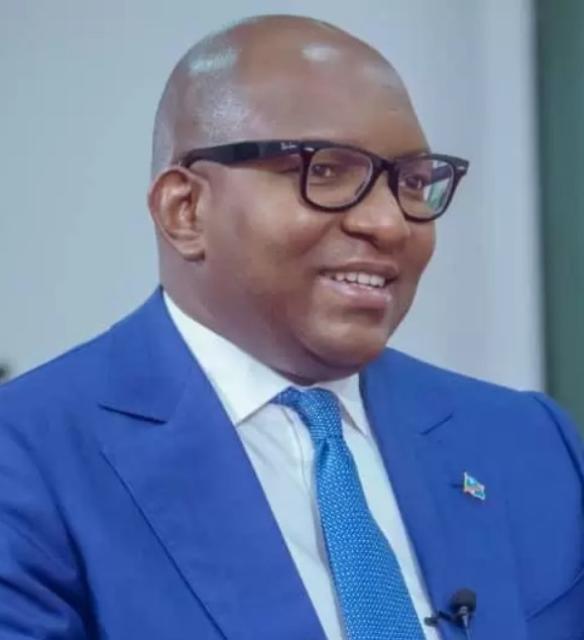
Jean-Michel Sama Lukonde Kyenge’s route to the highest offices in the Democratic Republic of the Congo ran through engineering, mining, and a series of political realignments. A Katanga-born son of a prominent regional politician, he became prime minister in 2021 after leading the state mining company Gécamines. He left that office in 2024 to take up his elected parliamentary mandate and was later chosen to preside over the Senate.
Origins and Education
Sama Lukonde was born in Paris on August 4, 1977, and is associated with the former Katanga province in southeastern Congo. His father, Stéphane Lukonde Kyenge, was a well-known Katangan political figure who was assassinated in 2001. Public accounts of the family provide little detail about Sama Lukonde’s private childhood, but his studies and early work connected him closely to the mining heartland around Kolwezi and Lubumbashi.
He completed secondary studies in industrial chemistry at the Institut Technique de Mutoshi in 1996. In 2000, he earned a qualification in information technology in South Africa. He later studied inorganic chemistry and metallurgy at the University of Lubumbashi, graduating in 2006. Training placements at Gécamines facilities gave him practical exposure to the industrial sector that would anchor his early career.
Business and the First Political Roles
His professional career began in South Africa with MultiChoice Africa. He returned to Congo in 2001 and worked in mining, including on projects linked to Gécamines. In 2006 he entered national politics as a member of parliament, serving through 2011.
He joined the central government in 2014 as minister responsible for youth, sports, and leisure under President Joseph Kabila. During his tenure, the national football team, the Leopards, finished third at the 2015 Africa Cup of Nations in Equatorial Guinea. His ministry also promoted the construction of municipal sports facilities in Kinshasa.
In September 2015, he resigned from the sports portfolio after his party, Avenir du Congo, broke with the presidential majority. The party was protesting the possibility that Kabila might seek another term, which opponents argued would violate the constitutional limit. Sama Lukonde’s resignation placed him among politicians distancing themselves from the governing camp during a period of mounting debate over the country’s political succession. He later worked with the opposition coalition known as the G7, associated with Moïse Katumbi. Ahead of the 2018 presidential election, he shifted his support to Félix Tshisekedi.
Gécamines and Appointment as Prime Minister
In 2020, Sama Lukonde was appointed director general of Gécamines, the state-owned mining company at the center of Congo’s copper and cobalt industries. The role gave him a high-profile executive position before he returned to the cabinet as head of government. On February 15, 2021, President Tshisekedi named him prime minister, tasking him with forming a government for the Union sacrée coalition. His cabinet took office on April 26 after the National Assembly approved its programme.
The coalition had been assembled from a wide range of political groups, and the negotiations over appointments exposed competing interests from the start. Some lawmakers who had switched allegiance to Tshisekedi complained that the distribution of cabinet posts was unfair and threatened to obstruct the government’s approval. Sama Lukonde and the president negotiated with legislators, and the Assembly ultimately endorsed the programme. The episode showed the fragile, coalition-building work behind the government he was asked to lead.
The government presented a broad development agenda, including the 145 Territories Local Development Programme, primary education without fees, and expansion of universal health coverage, initially emphasizing free maternity care. These initiatives formed part of the president’s wider programme and were advanced by Sama Lukonde’s administration. Supporters pointed to them as efforts to extend services beyond major cities; their implementation unfolded amid limited public resources and the country’s continuing security and infrastructure problems.
Security Challenges and Political Departure
The most difficult test of the government was persistent violence in eastern Congo. In May 2021, the authorities imposed a state of siege in North Kivu and Ituri, placing civilian administration under military and police authority in an effort to curb armed groups. The policy drew criticism as violence and displacement continued, and protests demanding better protection were sometimes met with force. In a 2023 survey, a substantial majority of respondents assessed the government’s performance negatively on insecurity in the east. The gap between the administration’s stated security aims and conditions on the ground remained a major challenge throughout his term.
Sama Lukonde remained prime minister through the 2023 elections and the subsequent formation of a new legislature. On February 20, 2024, he submitted his resignation to President Tshisekedi after his mandate as a national deputy had been validated. His departure brought the resignation of the entire cabinet. He had led the government for just over three years; Judith Suminwa Tuluka succeeded him, taking office on June 12, 2024.
Senate Presidency and Continuing Role
Sama Lukonde was elected to the Senate in 2024 and, on August 12 that year, won election as president of the upper chamber with 84 votes. He succeeded Modeste Bahati Lukwebo. Official Senate records and public statements continued to identify him as Senate president in 2026. In that role he has represented the chamber in parliamentary and diplomatic forums, including meetings on regional security and peace efforts.
His public career has moved between technical management and political leadership: from industrial chemistry and mining projects to parliament, the sports ministry, the executive leadership of Gécamines, the premiership, and the Senate. His rise reflects both the importance of the mining sector in Congolese public life and the shifting alliances that have shaped the country’s recent politics. His premiership is remembered for ambitious national development programmes and for the unresolved security crisis in the east, the challenge that most visibly tested his government.