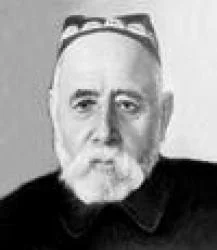
Jean Nicot
Early life and royal service
Jean Nicot was born in Nîmes, France, in 1530. He became a humanist scholar and entered the service of the French crown. In 1556, he was appointed a royal secretary, a position that brought him into the administrative and intellectual life of the court.
In 1559, Nicot was sent as France’s ambassador to Portugal, where he served in Lisbon until 1561. His mission involved diplomatic and commercial tensions between the two kingdoms, including disputes over French activity in Portugal’s overseas territories. The assignment placed him in a port city connected to the movement of plants and goods from the Americas into Europe.
Tobacco and his name
While in Portugal, Nicot encountered tobacco, a plant already used by Indigenous peoples in the Americas and circulating through European trade. Around 1560, he sent tobacco to France and promoted its supposed medicinal properties at court. The story that he introduced it to Queen Catherine de’ Medici as a remedy for headaches helped make him famous, though the details of the episode are not fully secure. Another French traveler, André Thevet, also claimed a role in introducing the plant.
Nicot did not discover tobacco or originate its use. His importance was that he helped popularize it in France. The plant came to be called “nicotiane” and later received the botanical name Nicotiana in his honor. The word “nicotine,” coined much later for tobacco’s active alkaloid, also preserves his name.
Scholarship and the French language
Nicot’s lasting literary achievement was his work on French lexicography. He revised and expanded earlier French-Latin dictionary material, including work associated with Robert Estienne and Aimar de Ranconnet. The result, the Thresor de la langue françoyse tant ancienne que moderne, appeared in 1606, after Nicot’s death, in an edition prepared by the bookseller David Douceur.
The Thresor helped move French dictionaries toward fuller descriptions of French itself, rather than using French mainly as a pathway to Latin. It collected vocabulary from different periods and registers and became an important resource for later lexicographers. Nicot’s work as a scholar therefore outlasted the diplomatic episode that made his name famous.
Legacy
Nicot died in Paris around 1600, though references differ on the exact year. His reputation rests on two very different legacies: the introduction and promotion of a plant that would become a major global commodity, and a dictionary that helped shape the study of French. His name is now encountered most often through tobacco, but his contribution to the history of the French language was substantial in its own right.