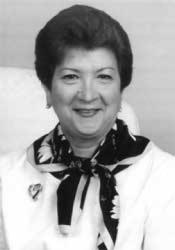
Jeannette Rankin
 USA
USA- Jeannette Rankin: A Pioneering Congresswoman and Pacifist
- Progressive Reform and Suffrage
- Election to Congress: A Historic Achievement
- Pacifism and Conscience
- Post-Retirement: Activism and Legacy
Jeannette Rankin: A Pioneering Congresswoman and Pacifist
Early Life and EducationJeannette Pickering Rankin was born on June 11, 1880, on a ranch near Missoula, Montana. The first of seven children to a Canadian immigrant, she graduated from the University of Montana with a degree in biology. She moved to New York City in 1904, where her experiences as a nurse in the impoverished Lower East Side shaped her pacifist views.
Progressive Reform and Suffrage
Rankin became an advocate for social reform, fighting for civil rights, women's rights, and the welfare of the poor. She joined the New York School of Philanthropy and worked in Spokane, Washington. At the University of Washington, she became involved in the women's suffrage movement, believing that "slum conditions" hindered women's ability to vote. Rankin was a key organizer for the New York State Woman Suffrage Party and the National American Woman Suffrage Association (NAWSA).
Election to Congress: A Historic Achievement
With the support of her brother, Rankin ran for Congress in 1916. On November 7, 1916, she was elected as a Republican from Montana, becoming the first woman in the United States Congress. Her victory drew international attention. Rankin's weekly newspaper column was widely read by suffragettes, but her outspoken opposition to US entry into World War I in 1917 led to her vilification in the press.
Pacifism and Conscience
Despite her defeat in 1918, Rankin remained an outspoken pacifist. She returned to Congress in 1940, again with her brother's backing. She continued to advocate against war, arguing that the enemy lay within the United States itself, in the form of hunger, poverty, unemployment, and disease. She supported strengthening the national defense but not entering a world war: "As a woman, I can't go to war, and I refuse to send anyone else."
Post-Retirement: Activism and Legacy
After her second term ended in 1943, Rankin retired to Montana, where she cared for her aging mother. She later traveled extensively. Rankin re-emerged as an unwavering anti-war activist in her later years. She died of natural causes on May 18, 1973, just weeks before her 93rd birthday. Her estate became the seed money for the Jeannette Rankin Foundation, which provides educational scholarships to low-income American women.