Jens Otto Krag
 Denmark
- Early Life and Political Beginnings
- Parliamentary Career and Ministerial Posts
- Return to Parliament and Prominence
- Premiership
- Personal Life
- Later Years and Legacy
Early Life and Political Beginnings
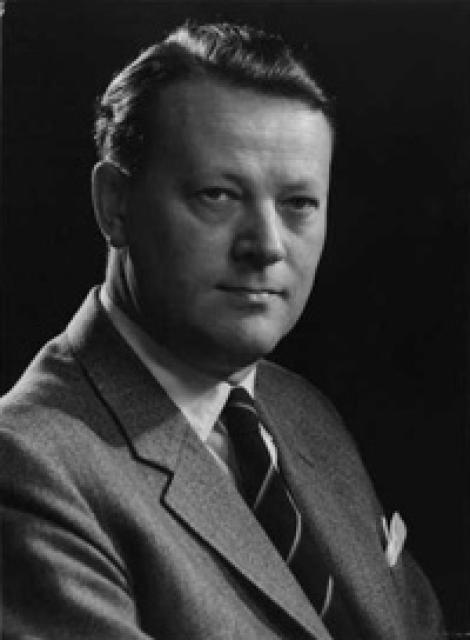
Jens Otto Krag was born on September 15, 1914, in Randers, Jutland, Denmark. In 1930, he joined the youth organization of the Social Democratic Party. He moved to Copenhagen to study economics at the University of Copenhagen during the 1930s and became active in the party.
Parliamentary Career and Ministerial Posts
In 1947, Krag was elected to the Danish Parliament and became Minister of Trade. He played a role in strengthening the Danish military and supporting Denmark's membership in NATO in 1949. In 1950, Krag left Parliament due to conflicts with party leaders Vilhelm Buhl and H. C. Hansen. He also sought to improve his English and travel the world, leading him to request a position at the Danish embassy in the United States.
Return to Parliament and Prominence
In 1953, Krag was re-elected to Parliament and appointed Minister without Portfolio. He became Foreign Economic Minister a month later and held that post until 1958 when he became Foreign Minister.
Premiership
In September 1962, Krag succeeded Viggo Kampmann as both Prime Minister and party chairman. He served as Prime Minister until 1967 when his party lost the elections. It was the first time in 20 years that the Social Democratic Party was not in power. In 1971, Krag regained the premiership after an election victory. However, he resigned abruptly a year later on the same day that a narrow majority of Danish voters approved joining the European Community. Krag cited exhaustion as his reason for stepping down. He was succeeded as Prime Minister and party chairman by Anker Jørgensen.
Personal Life
Krag was married twice, with his second wife being the renowned Danish actress Helle Virkner. Both marriages ended in divorce, largely due to Krag's infidelity. He fathered three children, one of whom was born out of wedlock.
Later Years and Legacy
Krag died of heart failure on his summer house in Skovsgården, North Jutland, in 1978. He remains one of the most significant figures in Danish history and is remembered for his leadership, diplomatic skills, and commitment to social democracy.