Mihael Oginskiy
 Poland
- Early Life and Political Career
- Pretender to the Polish Throne and Lithuanian Governor
- Mission to France and the Bar Confederation
- Defeat at Stołowicze
- Exile and Return
- Literary and Musical Achievements
- Later Career and Death
- Allegiance to Russia and Final Years
Early Life and Political Career
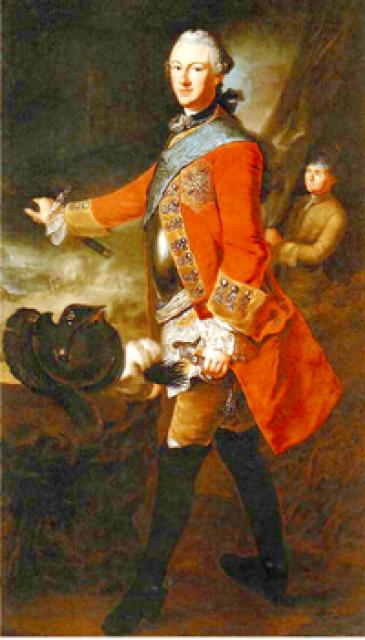
Mieczysław Ogiński was a prominent statesman and military commander in the Polish-Lithuanian Commonwealth. Born into a noble family, he played a pivotal role in Polish political and military affairs during the 18th century.
Pretender to the Polish Throne and Lithuanian Governor
In 1764, Ogiński emerged as one of the contenders for the Polish throne. The same year, he was appointed Voivode of Vilnius, and in 1768, he became Grand Hetman of Lithuania.
Mission to France and the Bar Confederation
In 1767, King Stanisław Poniatowski sent Ogiński as an envoy to Louis XV of France to protest the intentions of neighboring powers to seize Polish territories. Ogiński actively participated in the Bar Confederation, an armed rebellion against Russian influence in Poland.
Defeat at Stołowicze
In 1771, Ogiński faced a devastating defeat at the Battle of Stołowicze against Alexander Suvorov. Suvorov's forces, significantly outnumbered by Ogiński's, emerged victorious.
Exile and Return
Following his defeat, Ogiński spent several years in exile. Upon his return, he settled in his castle in Słonim, where he initiated a period of rapid urban development. He also supported the construction of the Ogiński Canal.
Literary and Musical Achievements
Beyond his political and military endeavors, Ogiński was also a gifted poet, composer, and musician. He wrote numerous poems and composed polonaises and other musical works that gained renown.
Later Career and Death
In 1781, Ogiński was appointed Governor of the Lithuanian Province. He later traveled abroad to seek support for his cause. In 1793, he resigned as Grand Hetman and moved to Vienna.
Allegiance to Russia and Final Years
In 1795, Ogiński pledged allegiance to Catherine II of Russia. He spent his remaining years in Florence, where he passed away in 1800.