Jerzy Maria Kirchmayer
 Poland
- Biography of Jerzy Maria Kirchmayer
- Military Career
- World War II and Imprisonment
- Later Years and Legacy
Biography of Jerzy Maria Kirchmayer
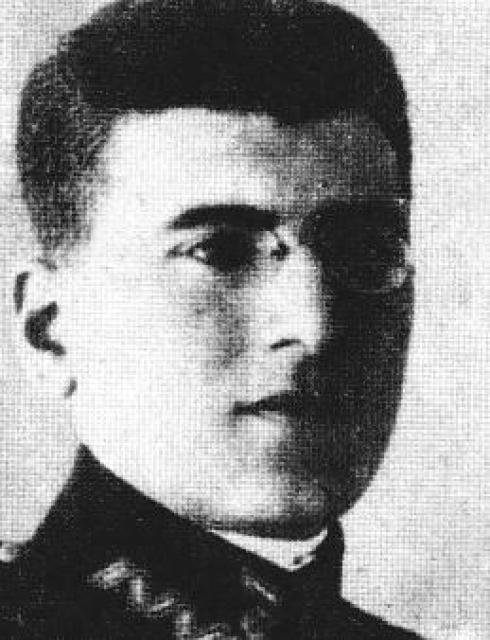
Jerzy Maria Kirchmayer was a Polish historian and military officer, serving as a Brigadier General in the Polish Army. He was one of the first historians to document the Warsaw Uprising of 1944. Born in Krakow, Kirchmayer attended a trade school in Lviv before enrolling in a prestigious Jesuit gymnasium in Chyrow. After completing his education in 1914, he traveled to Russian-occupied Poland where he was interned as a citizen of Austria-Hungary. Kirchmayer joined the Polish 3rd Corps in the East and returned to Poland in December 1918. He continued his service in the Polish Army, primarily in the artillery, throughout the war with the Bolsheviks.
Military Career
Kirchmayer remained in the army after the war, completing artillery school in 1921 and earning the rank of junior lieutenant in 1922. He graduated from the military academy in 1924 and was promoted to senior lieutenant. From 1921 to 1930, Kirchmayer served mainly in the 3rd and 16th Field Artillery Regiments. He also spent time in the artillery bureau of the French Military Mission from 1924 to 1926. In 1930, Kirchmayer was promoted to captain, and two years later, he was appointed deputy commander of artillery in the 13th Infantry Division. In 1936, he became a major and joined the military inspection staff in Torun shortly before the start of World War II.
World War II and Imprisonment
During the German invasion of Poland, Kirchmayer served as the deputy chief of the operational service in the 'Pomorze' army. After the Battle of Bzura, he led his troops to Warsaw, where he was seriously wounded in the Kampinos Forest. Instead of being captured by the Germans, Kirchmayer joined the resistance group ZWZ, which later became the Home Army. He was promoted to lieutenant colonel in 1942. Due to his injuries, Kirchmayer traveled to Eastern Poland for medical treatment and encountered Soviet forces on the way. In July 1944, he joined the 1st Polish Army.
Later Years and Legacy
In 1945, Kirchmayer became a colonel, and in 1947, he served as a special officer to the chief of staff. He was later promoted to brigadier general and assigned to the Academy of General Staff in Warsaw. However, his military-academic career was cut short when his involvement with the Home Army was discovered, leading to his expulsion from the army. Kirchmayer was arrested in 1950 and sentenced to life imprisonment on false charges of espionage and conspiracy. After spending four years in various Polish camps, he was released during a brief political thaw in October 1955. Kirchmayer was rehabilitated in April 1956 but was not allowed to return to the army. He found employment at the Historical Institute of the Polish Academy of Sciences. Unfortunately, his health, which had been severely affected during his time in the camps, could not be fully restored. Kirchmayer passed away on April 11, 1959, and was buried in a military cemetery in Warsaw at the age of 63.