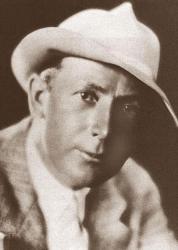
Jesus Franco
 Spain
SpainBiography of Jesús Franco
Jesús Franco was a Spanish director, actor, cinematographer, producer, composer, and screenwriter. He often single-handedly created his films, taking on multiple roles such as director, screenwriter, cinematographer, composer, and more. Additionally, Franco also appeared as an actor in his films. He owned his own studio, One Shoot Production, which specialized in producing horror and pornography films.

Early Life and Career
Jesús Franco was born on May 12, 1930, in Madrid, the capital of Spain. He began making his first films in the late 1950s. However, one of the films that brought him fame was the horror film "The Awful Dr. Orloff" in 1962. The plot of the film closely resembles the plot of Georges Franju's film "Eyes Without a Face" and tells the story of a deranged doctor who kidnaps beautiful women and transplants their faces onto his disfigured daughter to restore her beauty. The theme of deranged maniacs is also present in Franco's films such as "The Sadistic Baron von Klaus" (1962), "The Secret of Dr. Orloff" (1964), and "The Diabolical Dr. Z" (1966). In 1970, Franco released "Count Dracula," which was based on Bram Stoker's famous work and starred well-known actors Christopher Lee and Klaus Kinski. In 1972, he directed "Eugenie: The Story of Her Journey into Perversion," which featured both the iconic character of Frankenstein and Count Cagliostro. Franco's films about cannibals, such as "Devil Hunter" (1980) and "White Cannibal Queen" (1981), are also well-known. His film "Grave of the Living Dead" (1983) is considered by some as one of the silliest zombie films ever made.
Influence of Vampires
Jesús Franco extensively explored the theme of vampires in his works, often incorporating a significant amount of eroticism and, at times, pornography. Many of his films revolve around a lonely and sexually-charged female vampire who exposes her body and thirsts for blood. Noteworthy films in this genre include "Female Vampire" (1973), "Succubus" (1968), and "Vampyros Lesbos" (1971). Franco also made several loose adaptations of literary works by Marquis de Sade and Leopold von Sacher-Masoch. In the case of de Sade's works, his films "Eugenie" (1969) and "Justine" (1970) were loosely based on the work "Philosophy in the Bedroom." "Justine" starred Jack Palance, Mercedes McCambridge, and Klaus Kinski. In 1969, he also directed the film "Venus in Furs," which was based on von Sacher-Masoch's work of the same name. Franco's first film of this exploitative genre was the 1969 film "99 Women." Throughout his career, Franco made numerous films of this nature, with standout examples including "Ilsa, the Wicked Warden" (1977) with actress Dyanne Thorne and "Sinfonia Erotica" (1981), which featured pornographic actress Ajita Wilson. However, unlike his exploitation films set in Nazi concentration camps, these films were set in hospitals and brothels in African countries.
Collaborations and Later Work
Franco collaborated with many individuals throughout his career, including Howard Vernon, Jack Taylor, Maria Rohm, Soledad Miranda, and Lina Romay. Soledad Miranda was one of Franco's constant sources of inspiration until her death, after which Lina Romay took on that role (she was also his wife). Franco also worked closely with producer Erwin C. Dietrich, who himself made exploitation films under the pseudonym Michael Thomas. Later, Dietrich released Franco's works on DVD under the title "The Official Jess Franco Collection." In 1996, Franco began collaborating with the Spanish punk rock band "The Killer Barbies," who appeared in two of his films: "Killer Barbys" (1996) and "Killer Barbys vs. Dracula" (2002).